In the summer of 2025 Capcom revealed the next mainline game in the Resident Evil franchise: Resident Evil Requiem. They talked a little about its many years in development and how it had gone through several iterations before they decided to have it focus on Grace, a new character. Their explanation for this is that they wanted to have a game with a horror experience like Resident Evil 2 and 7 with Leon (the protagonist of RE2, 4, and 6) but didn’t think anything could scare Leon any more. So here was our main character Grace and they hope you enjoy it. They then went home and laughed to themselves until December 2025 where they revealed that Leon was in the game too with a completely different, more action-focused style. It’s the franchise’s 30th anniversary, after all, why not try to cram both the remake third-person gameplay and the modern first-person gameplay into one game? What could go wrong?
Generally when a game has multiple playable characters the most you can expect is slightly different gameplay styles and mechanics, such as in Devil May Cry 5. Requiem goes a step beyond that with Leon and Grace having different gameplay styles, similar mechanics, but completely different UI and crafting systems. This, of course, is part of Capcom’s attempt to stitch their competing horror and action versions of Resident Evil together, but it could also lead into endless comparisons between the two over the course of a review. So we’re going to do what we did for Devil May Cry 5 and split the review between our two characters, starting with Grace.
Grace
Grace is the traditional survival horror experience, with a limited inventory, even fewer bullets, and durable enemies that are better avoided than engaged with directly. Her UI is more in like Resident Evil 7 or the remake of RE2, so you have few inventory slots that everything from guns to crafting materials to a wrist band to open doors fills up. Why does something you can wear on your wrist take up space in your bags? Never you mind, that’s why. With these few resources Grace’s gameplay is encouraged towards enemy avoidance, either through heavily choreographed sequences with enemies that are too powerful for Grace to kill directly or by manipulating zombie behavior to more easily sneak past them.
Yes, zombies have “behaviors” now thanks to a new mutation of the T-virus that makes them say things and mimic behaviors from their previous lives. This means you have zombies working in kitchens, cleaning up messes, and constantly trying to turn off lights, depending what they remember about their past work ethic. In practice this is just a bunch of gimmicks with questionable applications. Because sure, now there are zombies that will punch light switches, but they will still stop doing that to grab you if you get too close. The maid zombies obsessed with cleaning up messes will still stop doing that to wander the halls randomly when the game decides you need to be attacked by something. Maybe it was her lunch break? Regardless the game quickly drops this gimmick after the first third of the game, with the only reminder that the zombies are any different afterwards being that they’ll occasionally have weapons to hit you.
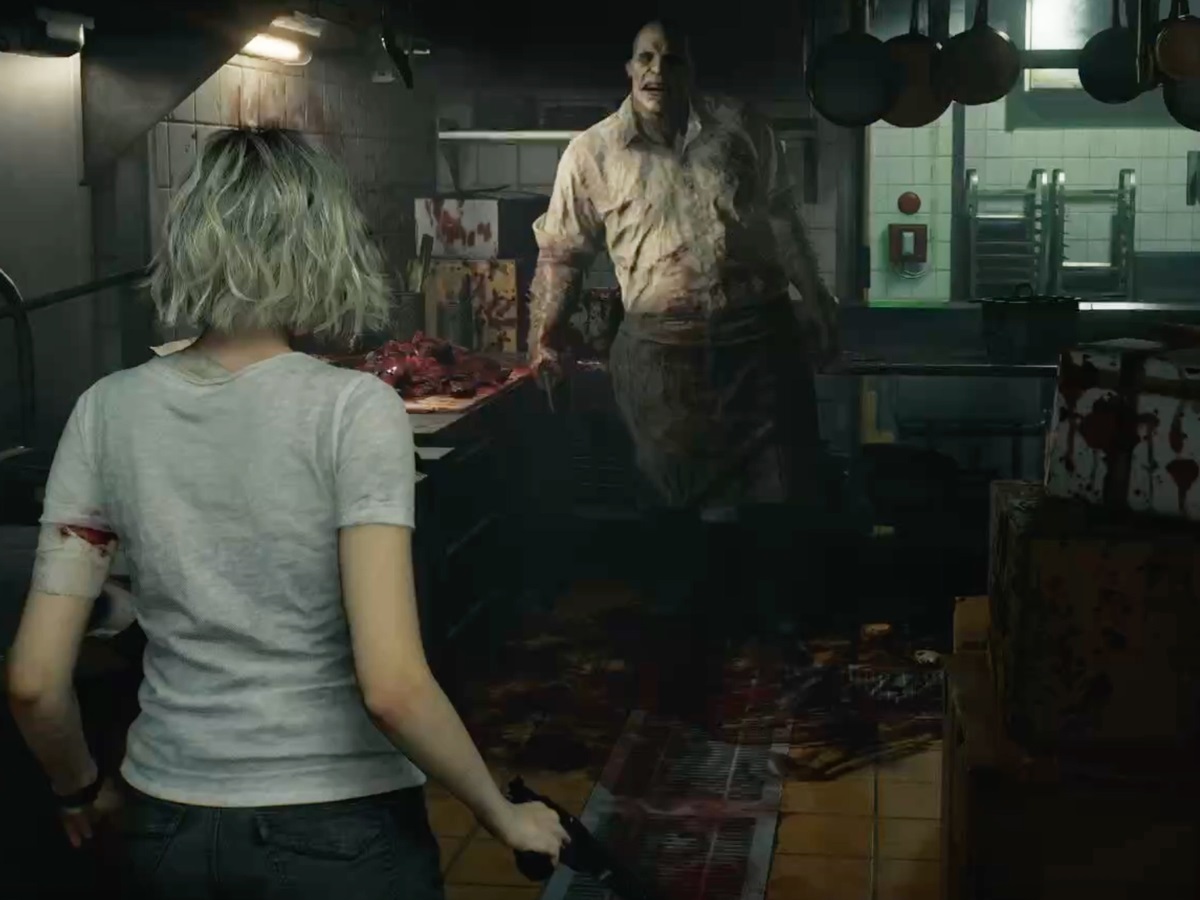
Another thing that Grace’s first gameplay sections introduce is the start of Requiem‘s many, many, MANY references to previous Resident Evil games. It’s the franchise’s 30th anniversary so they decided to not limit themselves to Requiem just being a celebration of the two different ways to play Resident Evil but to also make Requiem full of callbacks to characters, set pieces, and environments that you’ve seen before. The most immediate and impactful one to Grace specifically is The Girl, a massive mutated monster that loudly stomps around the environment akin to Mr. X, Nemesis, or Jack Baker, albeit most of the time she isn’t hunting you and is more just wandering around in the hopes of catching you. She’s a terrifying monster to behold in the first-person perspective that Grace is intended to be played, especially when she jumps out of the ceiling right on top of you as she so often loves to do. Unfortunatey for me she was the start of a trend in Requiem where everything was just a little more watered down than the things it’s referencing. The Sister is a true threat but unlike Mr. X in Resident Evil 2‘s remake she can kill you in one hit and is easily chased off by leading her into bright lights, which ruins the nuance some. In a world of one hit kills and environmental defense The Sister feels far more scripted than the likes of Mr. X, who did also have exploitable vulnerabilities but he also didn’t kill you instantly. This meant the game was more willing to throw him at you with limited warning and no defense just because the punishment was less severe than a restart. The Sister just made me roll my eyes when she was blocking my path because her environments were never designed for clever avoidance and were instead just for backtracking into the nearest light source until she went away.
Zombie strategy as Grace also pales in comparison to Resident Evil 2‘s remake for similar reasons. In the remake you could choose to disable zombies rather than kill them by shooting off their legs, which leaves them a threat but gives you the option to run around them more easily while saving ammo and preventing them from just getting back up after you’ve “killed” them once. Grace has no such options in Requiem, the best she can do is shoot the zombies in either the head or legs to stun them and then either push them over and run away or simply run away while they’re stunned. This is disappointing as one would hope that the return of zombies would have included a return to the mechanics that make the RE2 remake so fantastic, and while the “finding keys” and backtracking is there the reduction in combat strategy undermines much of the experience for me.
Admittedly you do have a few unique options to deal with the zombies that weren’t in RE2, specifically injectors that can be stabbed into unaware or stunned zombies to instantly kill them by destroying their heads. These can be crafted to make certain fights a breeze, especially against Requiem‘s reference to Resident Evil‘s crimson heads (now called “bloat heads”) that Grace can only really stop with either the injectors or wasting incredibly rare magnum ammo. Most players suggest simply playing the game by crafting injectors non-stop but their utility is limited in direct engagements since you’ll need regular bullets to stun the enemies first. Bullets you may not have if you’re just crafting injectors all the time.
The game also tries to bring distractions into Grace’s arsenal with empty bottles that she can throw to lure The Girl and zombies away. They’re very effective and can feel downright necessary to solve one or two encounters, but the main issue here is you have to throw them “in the right way.” While the zombies will react to the noise of a thrown bottle they will only “hear” the bottle if you throw it in a place they can reach, meaning that one time I wasted a bottle because I threw it behind a pile of boxes the AI knew the zombies couldn’t get to so they didn’t react. Throw the bottle half a pixel over to be next to the boxes and suddenly the zombies come running. Similarly certain zombies react more aggressively to sound and these seem even more arbitrary, since in the same bottle throwing scene said zombie didn’t react to the bottle while his brothers did. But then I started running and suddenly noise sensitive zombie was all ears and came after me. It’s a frustrating inconsistency, but one that rarely comes up while playing.
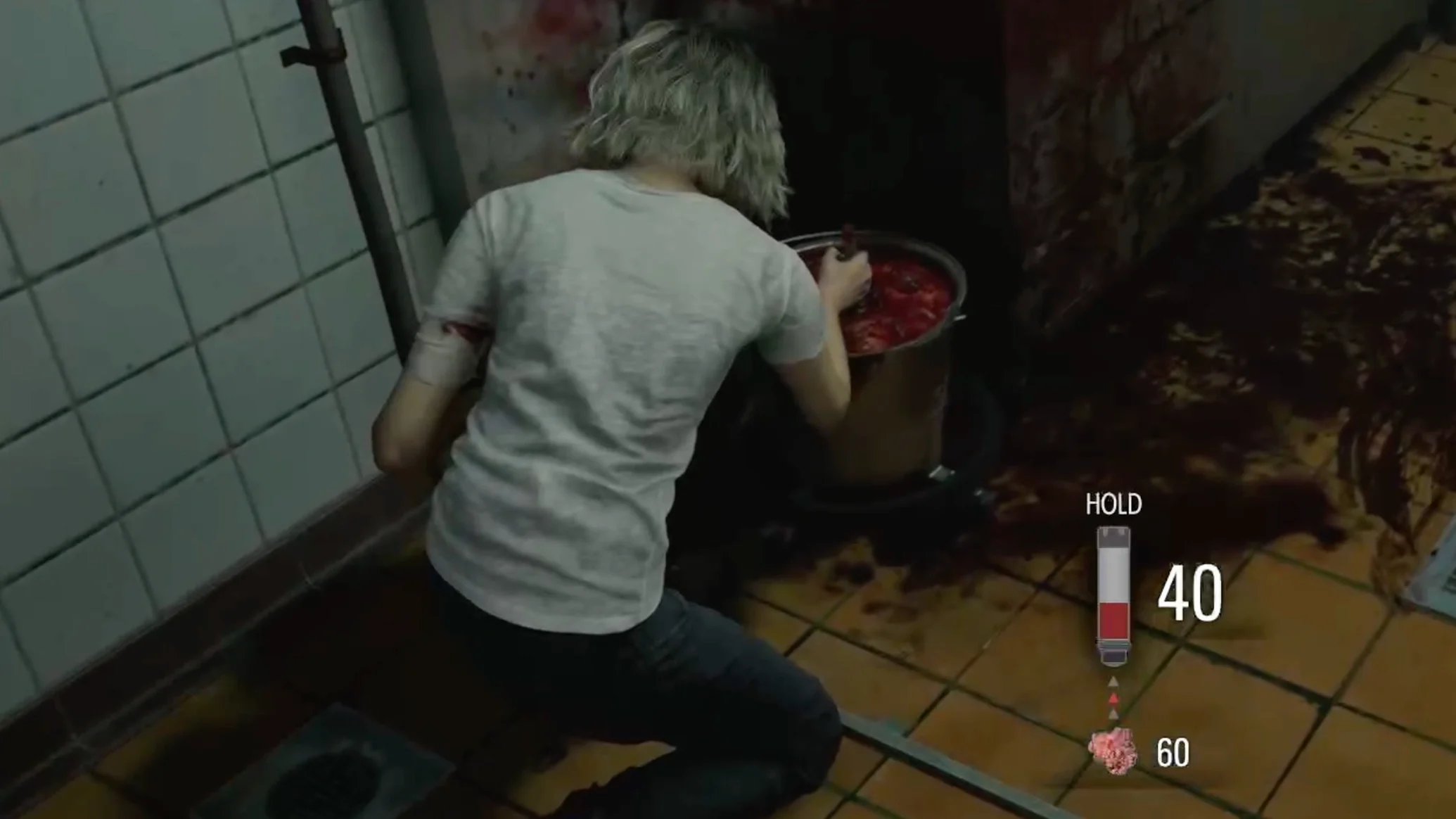
Putting aside the reduced gameplay options when fighting zombies and The Girl’s more scripted encounters compared to Mr. X, the most “off” feeling when playing as Grace is how the game wants you to play as her in first-person. To be clear: Grace’s sections are far more fear-inducing in first-person and if you want that more cinematic experience I highly recommend it for that. HOWEVER, it is very awkward as a general first-person camera experience for me because Grace doesn’t move like any FPS game you’ve ever played before. This is because of Requiem‘s more fluid POV settings that let you play as Grace and Leon in either first or third-person, because instead of being an actual FPS it’s a third-person game with the camera shoved into your face if you’re playing first-person. What this means is that your character moves like they would with third-person animations even if you’re playing first-person, so your arms are slightly delayed in moving a moment or two after you’ve moved the camera, and once I noticed it I couldn’t STOP noticing it. There’s just an awkwardness from it in the first-person gameplay and one could probably argue it’s “thematic.” After all, Grace is just a terrified young woman in way over her head, it makes sense that her movements would be a little clumsy! Unfortunately I’m not willing to credit this as intentional (at best it’s “not a bug it’s a feature”) and instead it’s an unfortunate byproduct of trying to let players pick their own cameras. This is also undoubtedly why you can’t shoot off zombie legs, as Requiem is built around similar combat as the third-person action in Resident Evil 4‘s remake and you couldn’t blow legs off in that.
So Grace’s sections have effective survival horror gameplay, but the scares lose a lot of their impact outside of the first-person point of view which is somewhat clunky from an animation perspective. It also lacks the nuance and options that you had with similar mechanics and experiences in the remake of Resident Evil 2. But don’t let deter you, because Leon is up next and surely he’ll set us straight!
Leon
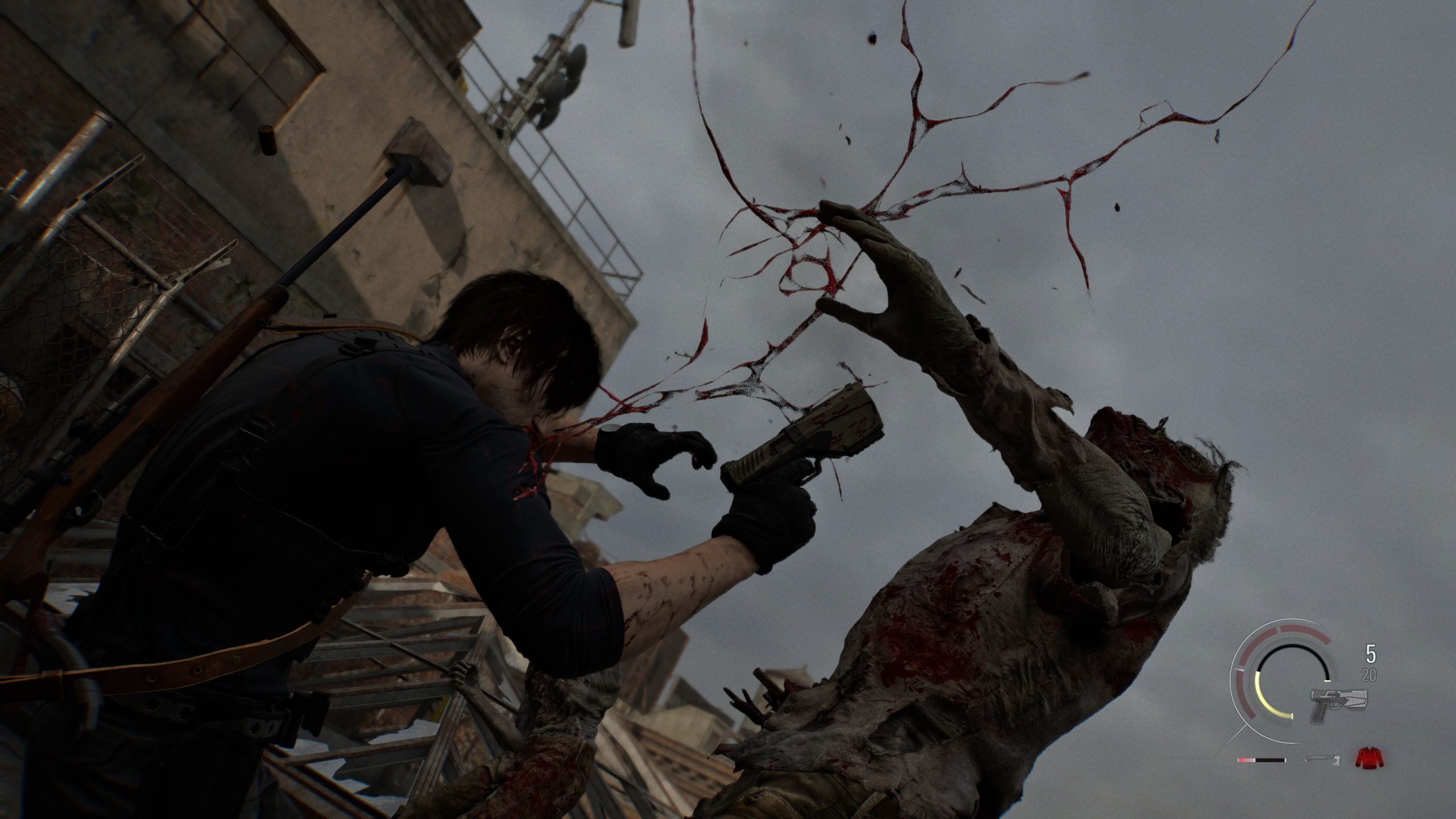
If you played the remake of Resident Evil 4 (and if you haven’t you should go do that, it’s incredible) then you have a good idea of how Leon’s combat in Requiem works. Leon has a much larger inventory and selection of weapons than Grace, plus he can take more damage, leaving him free to quickly and easily shoot, kick, chop, and stealth kill enemies with ease. His biggest and best new addition is his hatchet, a replacement for the disposable knives in the remake of RE4 that still has durability like said knives but doesn’t break when you run out and only needs to be sharpened, which you can do at any time. This means that unlike RE4‘s remake you’re free to parry attacks, instant-kill downed enemies, stealth attack, and force enemies off you as much as you want in Requiem, which makes the overall experience with Leon feel a lot less restrictive. It’s always nice when games find ways to let you use their overpowered weapons while still having a limiter on it, and in this instance for the hatchet it’s that there are generally enough enemies per fight that you either can’t use the hatchet for everything or you need to find brief windows to sharpen it. Either way it’s a great addition and I hope we see it or other melee weapons that have a sharpening mechanic in future Resident Evil games, especially the rumored upcoming remake of Resident Evil 5.
The other new addition is the ability to pick up fallen melee weapons, and this is where I start getting a little more critical. One of the first things they showed in the trailers for Leon was that he could now pick up and use fallen chainsaws, and after the initial “why do zombies have chainsaws?” my main reaction was just that it was a big gimmick to look cool in the trailers. My initial experience didn’t make it any better, as while the chainsaw was an as expected one-hit-kill on (most) enemies the wind up animation made you vulnerable against hordes and there’s a really dumb mechanic where it spins wildly on the ground for several seconds after you kill the enemy holding it. Regardless of the realism of this one way or the other what this means is that you’re generally unable to pick it up for a few moments and instead have to puppy guard the damn thing to stop the many zombies you’re fighting from rushing to pick it up. Which they will try to do in a hilarious and frustrating conga line, almost forcing you to try to pick the chainsaw up even while it’s spinning to avoid a ridiculous comedy routine. The zombies are immune to the damage from a spinning chainsaw on the ground, by the way, which makes the whole thing even more annoying. Leon can also pick up fallen non-chainsaw weapons and throw them, which is a cute gimmick but feels again like it’s just something for a cool cinematic highlight reel rather than a gameplay mechanic third-person Resident Evil actually needed.
Warning: the next three paragraphs REALLY get into the weeds about melee mechanics in the Resident Evil games due to my obsession with Resident Evil 4. If you just want to insert “author is too biased to accept any changes to RE third-person combat” and just move on to a section that’s less manic, that’s probably for the best.
The combat in Leon’s segments in general feels even more “extra” than it normally does in Resident Evil 4 (either version) to the point that I can’t help making comparisons to Resident Evil 6. There’s plenty of reasons to hate RE6 but for me, outside of the unwieldy movement and repetitive bosses, the biggest issue was just how needlessly flashy the melee combat was. Complete style over substance to the point that the game clearly forgot what the idea of melee was when it was introduced in RE4. This kind of melee combat was intended for Resident Evil as a form of crowd control, and the limb-based damage truly enabled that. Remember, RE4 was the first Resident Evil game where all the enemies were “fast,” armed, and they wouldn’t hesitate to rush right at you with a chainsaw, so melee combat coupled with the limb damage was your only real defense against them. Shot to the head staggered so you can do a wide kick to send enemies flying, shot to the knee on a running enemy makes them fall over, shoot the arms to disable weapons. It all worked perfectly for what it was intended to do, even if it got a little silly with the suplexes in the back half of the game and you were seeing the same animations 400 times. Resident Evil 5, for all THAT game’s faults, took it a step further with even more variety in the melee combat where your position relative to the enemy affected the moves and damage you did, not to mention being able to melee attack enemies on the ground. RE6, on the other hand, took RE5‘s increased number of animations without any of the nuance found in 4 and 5, instead it was just “people want to punch zombies” and you could do exactly that to the point it was practically wrestling rather than Resident Evil.
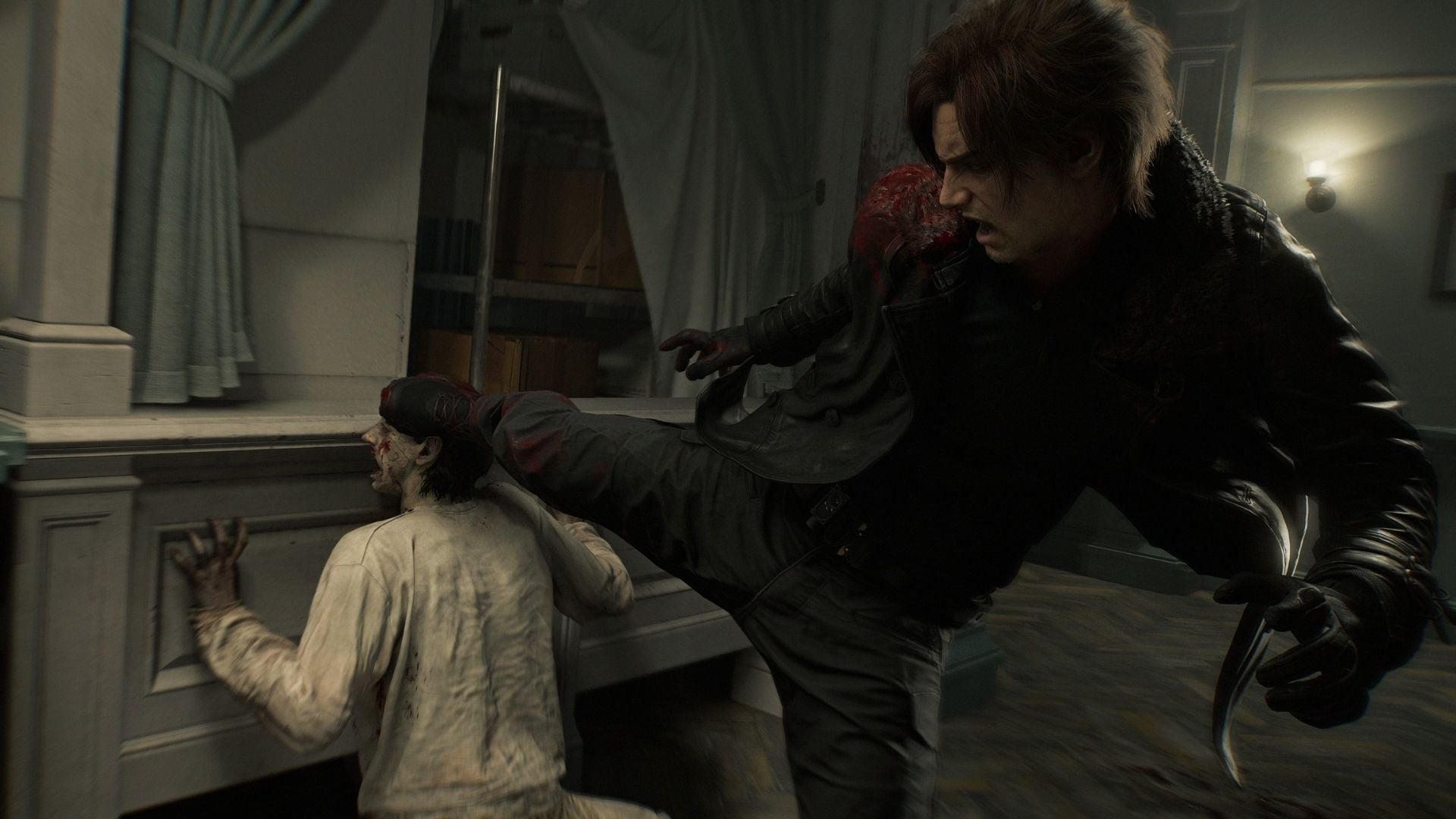
Requiem‘s melee attack mechanics feel much more in line with this RE6 mentality than with Resident Evil 4. For starters the zombies are mostly slow and resistant to stagger until they’re close to dead already, while the faster bloat heads wear a sign saying “I need to be shotgunned and then hit with an axe” rather than applying any sort of disabling blows from the other games. This means that much of the strategic use for melee attacks is missing beyond just saving ammo, which is a noble pursuit but not really what it should be there for. When you do hit with a melee attack Leon’s attacks are primarily single-target, straight ahead affairs (even doing a running jump kick rather than the rotating sweep he does in RE4‘s remake) that does make nearby zombies next to the main target stagger backwards slightly, but it’s not the “clear a path” mechanic that it was used for in 4. It gets especially awkward when instead of doing a standard melee kick Leon does one of his scripted finishing moves where he smashes a zombie’s head against the wall. Again these are new to Requiem and seem more in line with “oh man look how cool this is” rather than serving any strategic purpose, though the zombies rather hilariously stumble backwards like you just did a regular melee attack even if the finishing move animation has nothing to do with them. I guess they just get intimidated that a guy in his late forties can do that?
To be fair to Requiem it does add one other new thing to the melee system: wall stuns. Separate from the finishing moves with walls but with a similar end goal, if a zombie hits a solid object (or an invisible barrier) after being melee attacked they will be vulnerable to a “hatchet finishing attack” which is exactly what it sounds like. This makes optimal melee combat slightly more positional that it was in the other games because now the direction you melee enemies matters even more than it did before. The only issue is the environmental design really doesn’t accommodate this as most fights take place in hallways with multiple zombies coming your way in a pack, so positioning yourself to the side of one to kick them into a wall is a risk-reward equation that doesn’t really add up. To get around this zombies will generally be stunned just by lightly brushing up against walls or other stationary objects, which feels similar to the zombies staggering backwards from nothing when doing other finishers. It’s clearly just an attempt to make sure these systems function despite the framework they’re set in not being well designed for it. This is more of an issue with Requiem‘s environmental design than its combat though, and in the future I hope they keep these positional tactics around, especially if the melee weapon sharpening mechanic becomes a mainstay.
All of the above being said the combat in general as Leon feels great, regardless of how it actually engages with its own mechanics. Except, of course, for five minutes towards the end where they decide to give enemies guns, which I have to complain about and I’m sorry that it’s a spoiler but you need to know what you’re getting into. Resident Evil keeps trying to push you into sequences where enemies have guns, be it mini-gun bosses in RE4 or the actual straight up gun fights in RE6, and for the life of me I cannot understand why. Two different things happen when you engage in the gun fights in Requiem: you either discover that Requiem is NOT made for third-person cover-based shooting or you realize the game is trying to encourage you to use stealth tactics against its terrible AI and THEN you discover it’s not made for third-person cover-based shooting. God forbid you play the sequences in first-person. The late 2000s taught us that sticking your back to cover in these sorts of games leads to the combat feeling less clunky and more engaging, but Requiem appears to have unlearned that lesson since all Leon can do is awkwardly stealth crouch behind boxes because you die in like two seconds of gunfire. And yes, you can look up YouTube videos of people styling all over these encounters and good on them for doing it but guess what? You won’t be doing that in your first run, you’ll be eating lead and wondering why Capcom keeps trying to make their zombie horror games into Ghost Recon. It’s a big mistake, stop doing it.
To bring things back around to both characters let’s talk about Requiem‘s story. Thirty years after Raccoon City was nuked the survivors of the incident are turning up dead with their bodies covered in black markings, which immediately sounds like a hell of a hook for a Resident Evil game. Keep in mind that of our current cast of protagonists at least half of them were active in Raccoon City either during or just before the events of Resident Evil 2 and 3, so everyone from Chris to Ada to Rebecca could be on the list of people dying from whatever disease this is. And wouldn’t you know it, Leon is infected as well with black marks on his hands and neck and is slowly dying, so he’s got a personal stake in finding out why this is happening. Unfortunately instead of being an ensemble cast event, which would have been especially fitting given this is the 30th anniversary of the franchise, Leon is the only game in town and almost no other main characters are ever mentioned or even referenced as suffering from the same issue. I don’t get it. It costs nothing to make a passing comment about other characters from the franchise who are also impacted and you could even add “they’re still only showing early symptoms” so we have Leon as the barometer. But whatever, maybe they’re saving that for the already confirmed DLC.
Grace meanwhile is investigating the same deaths for the FBI but is immediately taken in by new villain Victor Gideon who, like many modern Resident Evil antagonists, turns out to have always been part of Umbrella and we’re only just learning of it now. Much of Grace’s story is about slowly uncovering why Gideon and his partners are so focused on her while also growing into the traditional Resident Evil protagonist: the kind that starts as terrified but ends as the capable “I’ll lock myself in a room with a monster because it has to be done” character you see throughout the franchise. That is when Leon isn’t constantly saving her from being eaten but she’s got to get a role model from somewhere, and it’s a real joy to go from Grace’s horrified screams to Leon being so over all of it because he’s been doing this for thirty years. Leon’s part of the game is especially full of the callbacks and references I mentioned earlier, ranging from the cute nods to the completely unnecessarily in your face appearances, but if you played Resident Evil 2‘s remake especially you’ll understand most of them. Some even make sense in the plot, which is a rare treat in the Resident Evil franchise: a story that makes sense (up to a point, at least). But also it wouldn’t be a Resident Evil game if it didn’t uncork more bottles than it closes and by the end you’ll have half a dozen dangling plot threads just asking to be tied up in the aforementioned DLC… though I doubt it will pay off the majority of them because we’ve got to save some lore for the next thirty years of games!
Requiem runs on the RE Engine, which means it looks great and runs great. Any and every meme you see about Leon’s incredible character model is accurate and the fantastic (if somewhat silly) gore effects for the zombies from the Resident Evil 2 and 3 remakes return as well. My favorite part is the animations, which you really can’t appreciate if you aren’t in third-person, where the characters will hold their flashlight with their neck when reloading pistols, or have different animations for holding their weapons depending how recently they’ve taken damage or done melee attacks. There are even fancy idle animations where the characters will check their weapons and different cutscenes depending which unlockable costumes your characters are wearing, such as Grace adjusting her glasses or Leon taking gloves off if they’re wearing them. It’s all fantastic detail that is unnecessary but I love that it’s in there, which is why I do get a little annoyed when the flashlight just becomes a phantom light source when you use two handed weapons, but you can’t have everything.
What you also can’t have is consistent corpses laying on the ground, apparently, as Requiem has a real issue with corpses staying on the ground where you left them. Resident Evil 4 avoided this problem by having enemies bodies dissolve but since these are Resident Evil zombies they have to stick around JUST IN CASE they’re going to hop back up and bite you. This is all fun and games in the spirit of the franchise but my issue is when bodies disappear and then reappear because the game just forgot to render them. You can in certain areas of the game see a corpse, leave the room and come back and the corpse is gone, then do it again and the body will be back where it was. This is not a deal breaker but it feels like a weird glitch to experience, especially in a game where they intentionally don’t have the dead bodies disappear for the sake of the tension. The blood splatter effects are also a little overexcited, as they look great in the moment but after the battle you’ll notice that they will occasionally clip through walls or other surfaces.
As pretty as Requiem is the game has a real issue with environmental design around the back half of the game. After a strong start of the usual “mansion” introduction with an interwoven building that has many different doors that need to be unlocked, you’ll eventually get funneled into a larger area that is almost entirely the same drab ruined buildings. Sure, they mix things up with different KINDS of run down environments and there’s one really unique set piece to be found, but the gameplay momentum really grinds to a halt and never really picks back up afterwards. It’s unfair to keep making comparisons to Resident Evil 4 but even when you were stuck in a castle or the village for long stretches at least the layouts in those areas were different. Sometimes you were in a little village and sometimes you were in a house and sometimes it was a quarry or caves by a lake. Requiem in this middle part just has different flavors of hallways that are sometimes elevated and sometimes half flooded but it’s never interesting to look at and the enemy variety isn’t much better since it’s almost always just more zombies.
I’m being unfair with a lot of these criticisms. Resident Evil Requiem is not a bad game by any stretch, in fact the switches between Grace and Leon create a very compelling and cathartic tonal shift between vulnerability and strength that very few games have ever attempted let alone matched. That being said, Requiem‘s biggest failure is that it tries to combine the remakes of Resident Evil 2 and 4 and fails to reach the heights of either. The zombies are navigated more with gimmicks than the interesting tactics like in RE2, the chase scenes are more scripted/linear than the ones in RE2, and the zombies are less interesting to fight (and are fought in far less interesting locations) than the ganados in RE4. On top of all that so much of what makes Requiem unique with its personality zombies, prowling mini-bosses, and repeated shifting gameplay perspectives all but goes away for the second half of the game. Requiem is probably still a top five Resident Evil title because you can play one game to get both the horror and action experiences, but it’s below the best games in the franchise. I recommend it if you’ve already played all the best Resident Evil has to offer, but if you haven’t then get the aforementioned games first, if only to get all the references Requiem makes due to the anniversary.