There’s always some level of caution to be had when you see the phrase “from the creator of” or “the team behind” in any piece of media, but it can be especially painful when it comes to video games. Budgets, creative vision, time tables, and internal support can all be lacking regardless of the name(s) attached, which is why for every Bayonetta or Star Wars Zero Company there’s a Mighty No. 9 or Devil’s Third. This is why new studio Rebel Wolves’ game The Blood of the Dawnwalker wasn’t a sure thing, despite the team made up of people that worked on Witcher 3 and Dawnwalker clearly shooting for a similar RPG experience. Let’s see if they managed to deliver, especially given the crowded release schedule this fall that makes it even harder to stand out.
I was going to sweeten the pot a little before jumping right into it but I’m going to get right to the point: I liked Blood of the Dawnwalker. If you’re reading this and like RPGs like Witcher 3 I think you’ll like it too, but there’s two big caveats that may drive people away, so I’m going to address them both now. First is the combat, which is a directionally based affair similar to mechanics in Kingdom Come Deliverance (I’ve heard) or For Honor. While you can block or swing your sword in an “omni” stance where you can block any attacks or attack like any other button mashing game, Dawnwalker encourages you to indicate directions when you attack and block for additional bonuses, such as reduced stamina costs. Yes, Dawnwalker is set up with a soulslike controls (shoulder buttons to attack and block, stamina costs when doing actions) but running out of stamina doesn’t really happen unless you specifically choose not to engage with the directional combat.
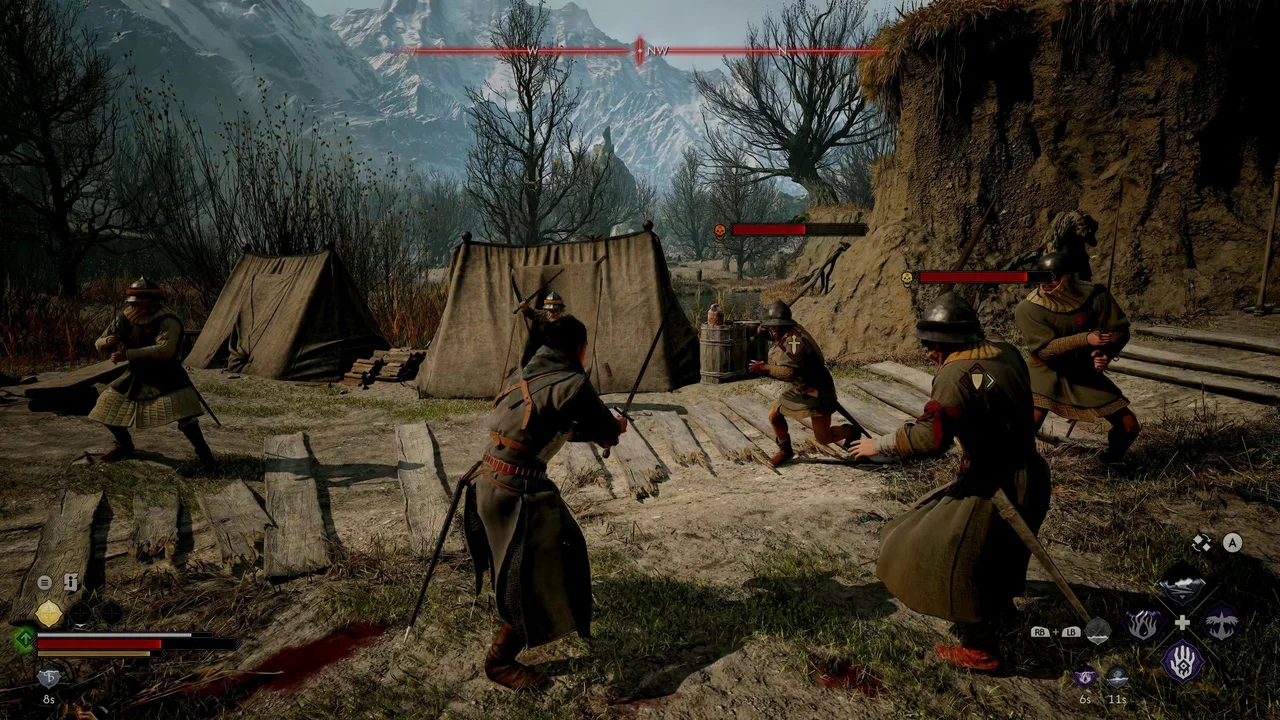
Additionally combat in Dawnwalker is very parry focused, as that is the primary way to damage the many block-happy enemies in the game. I will say the parry windows feel more generous compared to games like Sekiro, especially because enemies notifications for attacks will change color when they’re able to be parried so it’s much less of a guessing game than something like Devil May Cry or Sekiro. However, I know that soulslike controls and parry-focused combat are big turn-offs for many players, so if that’s going to bring down the experience for you I’m not going to try to talk you out of that. For what it’s worth the directional swings and blocks make the combat feel much more engaging than combat in other RPGs of this type, especially as you unlock damage bonuses for swinging a certain way after parries, but I’ve already conceded that this sort of combat isn’t for everyone. If you ARE a fan of parry-focused combat I’ll also mention that enemies are perhaps a little too durable at times, as this isn’t a parry game with a poise system so you have to actually beat enemies “fairly” by countering their attacks and stabbing them fifteen to twenty times. This isn’t the end of the world but fights against six enemies or more do drag on a little too long because of it, and the limited enemy variety doesn’t help.
Another thing that isn’t for everyone is the game’s most controversial mechanic: a limited time system. Protagonist Coen is in a literal race against time, as every quest you undertake in the game takes a number of “time segments” to complete and Coen only has thirty days to save his family from the clutches of a vampire court. Each day is broken up in sixteen segments (eight during the day and eight at night) and most quests will take around two to four time segments to start, with possible additional segments needed to fully complete it, which frustratingly the game doesn’t warn you about when you start a quest. Fortunately simply traveling around the environment or other basic RPG tasks won’t cause time to pass, but anything that makes you engage with the quest or the world in a meaningful way will take time.
Naturally this is terrible news for completionists, but for the rest of us it’s not the end of the world. Don’t get me wrong, I like seeing all there is to see in a game as much as the next person, but this also isn’t the sort of game where you have to play perfectly against an in-game clock to reach the ending in time. Dawnwalker is much like Legend of Zelda: Breath of the Wild where you can just go fight the final boss whenever you want, but beyond that just by playing normally I was able to unlock a quest to go fight the final boss through the story by day 16, which is just over half your available time. By the time I actually finished the game I had completed every notable quest except one that I appeared to be locked out of (I wasn’t nice enough to a character) and there were six days left in the game, though admittedly there’s a number of minor points of interest I’d ignored like mercenary camps, people in distress, or monster dens (all of which probably sound very familiar to Witcher 3 fans). I’d already gotten the best armor and sword in the game through actual quests, so I didn’t see much of a reason to do the minor side stuff and you shouldn’t either.
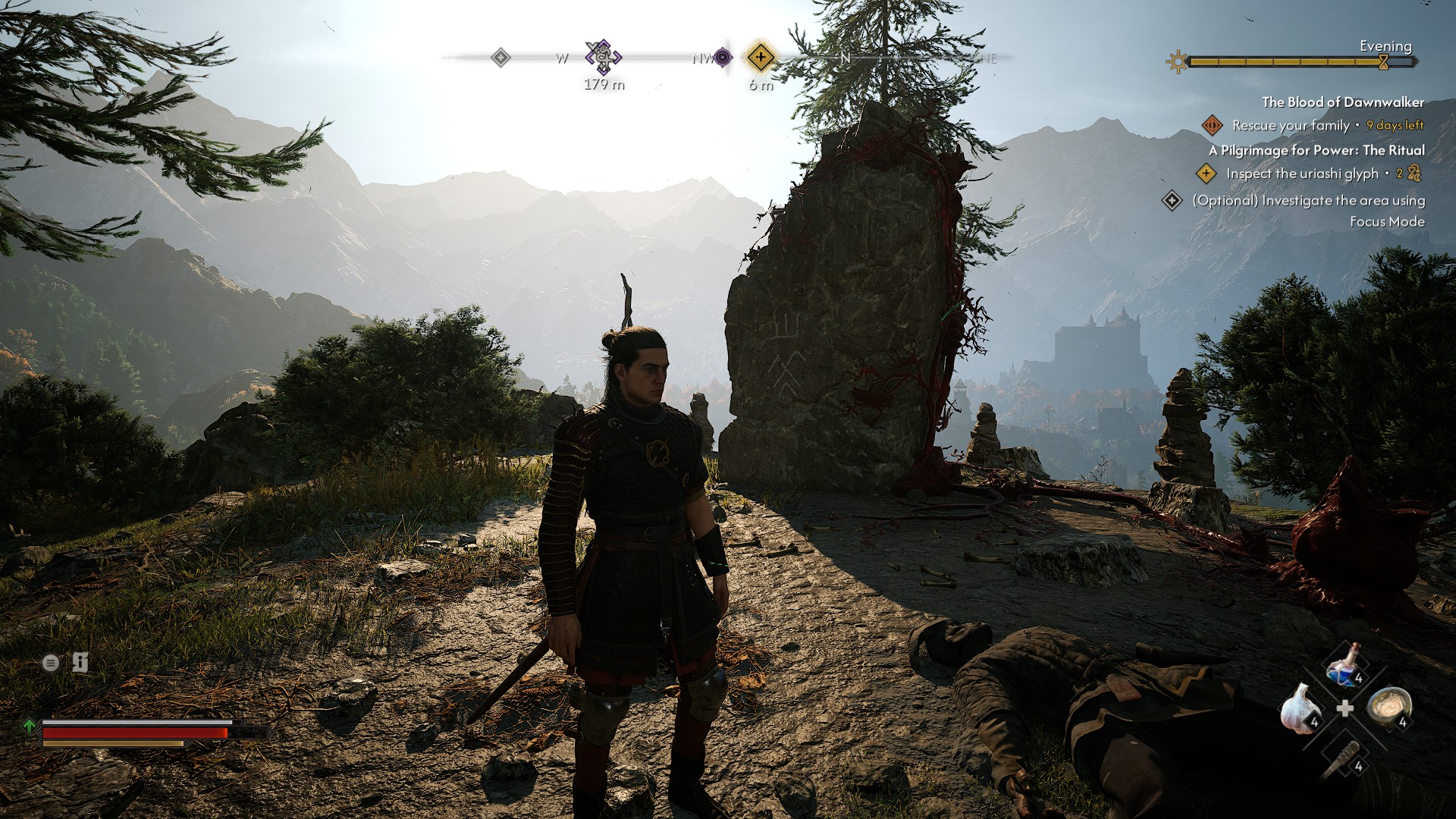
The only thing I actively dislike about the time system is that you have to spend time leveling up, which if you make a chart of all of the worst decisions in video games is certainly up there. Outside of some basic abilities every single time you level up an ability it takes at least one time segment to do so, meaning you will literally have lost multiple in-game days leveling up by the time you finish the game. I personally wrapped up Dawnwalker with over twenty skill points left, which I could have spent since I had about six days of time left but I couldn’t be bothered. Better to make sure you have enough time to see what the game has to offer than just increasing your critical hit chance by 10%, in my opinion. Other than that I didn’t mind the time mechanics overly much, and in my opinion they did create some fun roleplaying moments that otherwise wouldn’t exist in Dawnwalker without them. I’m in a race against time to save my family, do I really have time to intervene every time I see the city guards harassing someone? A pretty lady wants me to spend an extra time increment learning Latin with her, surely I don’t have time for that… right? In some ways this is my own personal failures as an RPGer, since traditionally I need an outside influence to encourage me to actually get “into character,” but I always enjoy when game mechanics change how you think about things and this limited time environment is certainly that.
If you’ve stuck around after hearing about the parry-focused directional combat and the limited time mechanics, you may be happy to hear that Dawnwalker is very similar to Witcher 3 in many respects. While you have no horse you’ll still spend a lot of time traveling 14th century European countryside across a map dotted with question marks asking you to uncover them. Said markers represent quests, bandit camps, monster dens, etc, during most of which you’ll be asked to investigate the area with the now generic “gray out everything but things you can interact with” vision from Witcher 3 and the Arkham series (but Coen never gets an explanation for why he’s so good at tracking and spotting things). These investigations will sometimes help Coen find clues to expand traditional RPG dialogue trees where he can choose to help, ignore, or undercut both humans and monsters in quests ranging from finding children lost in the woods to hunting local monsters. Fight something and you’ll get Slavic music you’ll swear is ripped straight out of Witcher 3, and when you level up you’ll even get a similar musical sting as well.
While the game’s DNA is firmly in Witcher 3 the framing of the main quest also brings to mind the Shadow of Mordor games, as many of the “encounters” in Dawnwalker are designed around dismantling the operations of the head vampire’s lieutenants. Free enough prisoners, destroy enough blood shipments, etc and the lieutenant will either get angry enough to challenge you directly or someone will be impressed enough to give you an opportunity to kill their blood-sucking boss. This is much like the warchief hunting in Shadow of Mordor but it also does reveal one of the weaknesses of Dawnwalker‘s time system in that these encounters are all based around a set expenditure of time. What this means is that so many of the actions you take to disrupt the lieutenants will take an absurd amount of time segments (three, in most cases) even if what you’re doing during that event is mundane. For some reason killing three people and stealing the blood vials in a chest takes just as much time as killing eight people and smashing barrels full of blood with a sword, which only makes sense when we’re trapped in a video game land. It’s Persona all over again where one social interaction with a character will be “make some realization and run across town to deal with it” while another will be “they make plans to hang out but then cancel them, sadly” and both will take the same amount of time out of your day. As I said during the limited time paragraphs it’s not a huge deal given the amount of time you’ll have to finish the game, but it feels frustrating in the moment. When you do end up fighting the lieutenants they’re just standard boss fight affairs where they’re “the sword one,” “the magic one,” and “the one that teleports too much,” but the lead up to their fights is (generally) the more interesting part, as two of the three are relatively unique quests in their own right.
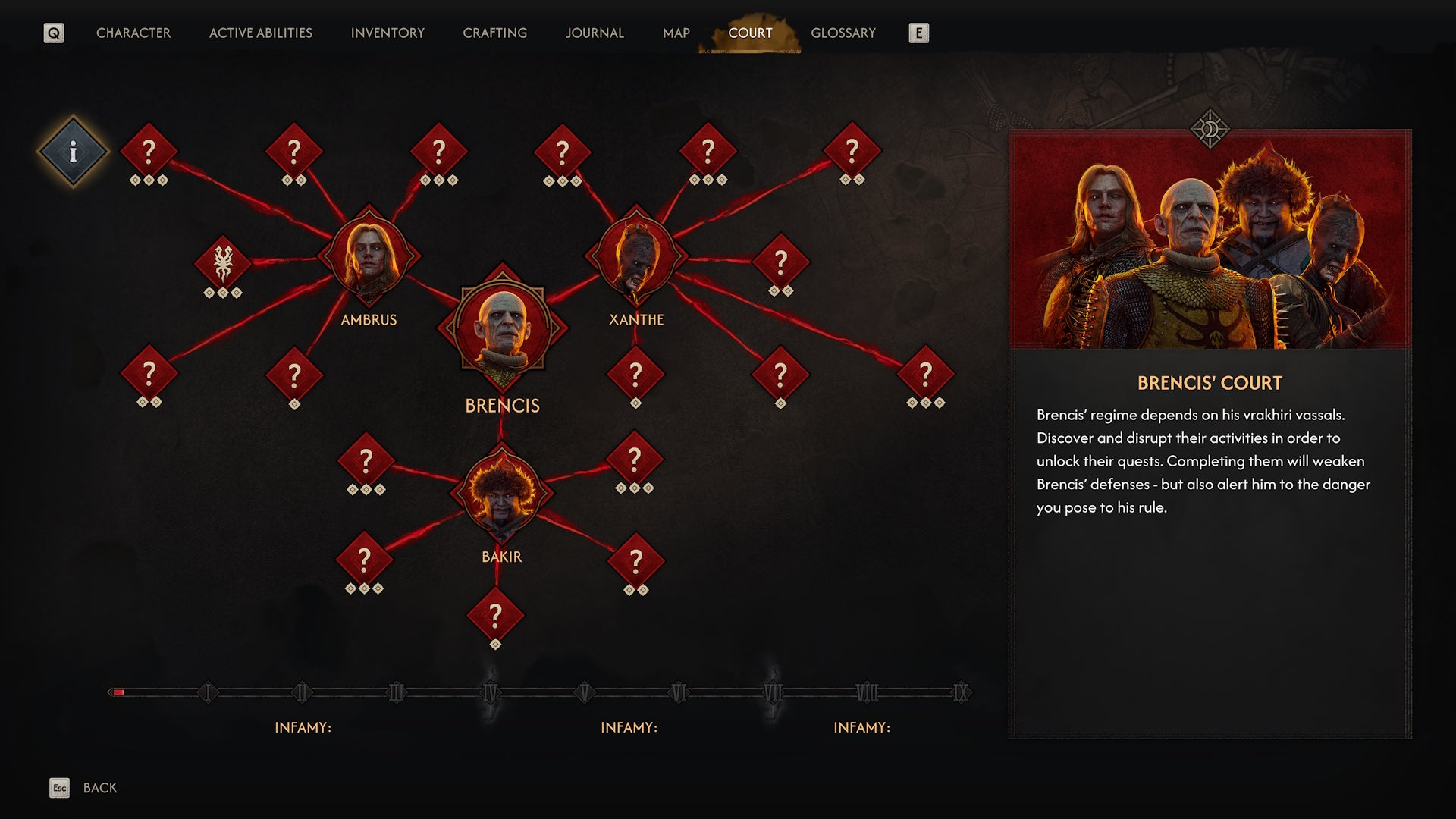
I should probably take a moment here to talk about the game’s story, it is an RPG after all. In the 14th century the Black Plague is raging across Europe, including the valley where Coen lives with his family and a thousand or so other people, overseen by a local lord. One night a group of vrakhiri (the game’s name for vampires but I’m going to stick with calling them vampires) arrive in the valley, killing the lord and curing everyone in the valley of the plague and all other health aliments thanks to the healing powers of their blood. Now the vampires are running the show and over the past two years have shutdown all religions, locked down the valley so no one can leave, and force each village to provide monthly blood donations. Things come to a head one night where a series of events leads to Coen’s family being taken prisoner and Coen himself is turned into a dawnwalker, a vampire that is a human during the day and a vampire at night. Coen doesn’t have much time to come to grips with his new reality though, as his family is set to be executed during lead-vampire Brencis’ coronation in a month’s time. So Coen is in a race against time to gather allies and undercut the vampire establishment as much as he can before assaulting Brencis directly to save his family, all while learning more about his new vampiric nature.
So you can see where the set time limit comes from and how it can create such good roleplaying moments if you let it, but Coen’s vampiric mechanics can create some great moments as well. As a vampire Coen can drink blood to heal and empower himself, but unlike most games with vampires in them Dawnwalker can make that hunger overpower Coen to make him kill people without player input. Whenever Coen is below half health as a vampire there’s a very good chance that he will “give into the hunger” while talking to NPCs, instantly killing them while draining their blood, and this can happen at almost any time with any living character. Important NPCs? Love interests? Some city guard? They’re all on the menu, which creates a couple of unique decisions when playing the game. Many fights end with you talking to allies or rescued NPCs, can you risk taking a fight and being so hurt afterwards that you might eat the first person you talk to? My favorite was being in the middle of a quest with a human ally and then night fell, so I had to run out into the woods for a second to eat a wolf before I was safe to be around for the rest of the scene. The game does have mechanics built in to prevent these sorts of issues to a point, as there are blood vials you can carry and drink like you would any health potion, but those aren’t super common in the early game and you might have an “accident” if you aren’t careful. On the plus side you can also choose to give into these urges if you wish even at full health, which is really fun when a local guard decides to threaten you in the middle of the night.
I could spend some time going into some of my nitpicks, most of which are clear design oversights by a small indie team. These include issues with NPC dialogue during travel, hostile wildlife pulling you out of your traversal abilities, sliding down walls with your vampire powers not really working outside of specific areas, and one specific moment where you can be a vampire during the day or a human at night and the game prevents you from using your respective abilities because they’re tied to time of day not your current character state. However if I had to pick one nitpick it would be how Dawnwalker limits its own story for the sake of trying to create a franchise. It’s insidious at first, the usual sort of thing you’d expect in a story driven game, as Coen is cast into a “big pond little fish” story as a vampire who doesn’t know the world they’ve been thrown into. Lots of “oh you don’t know?”s to questions Coen asks, but you put up with it at the time because you’re six hours into a forty-hour RPG and you expect the story to reveal itself as you go on. It does in some ways but doesn’t in many others, teasing a bigger world, bigger stakes, and adventures yet to come, but Dawnwalker suffers for me as a result. I’m not looking for Solo: A Star Wars Story levels of information no one asked for here, but I’d like my answers to any question to be something other than “not now, Coen.” It got so bad there were a few characters I started to actively dislike just because every prompt you gave them was met by “we can talk about that later.” There’s enough to piece together a framework and that’s obviously the only thing the developers wanted to do, but I really do wish the game’s world building could stand on its own rather than as just a stepping stone to what they’re hoping is a future franchise.
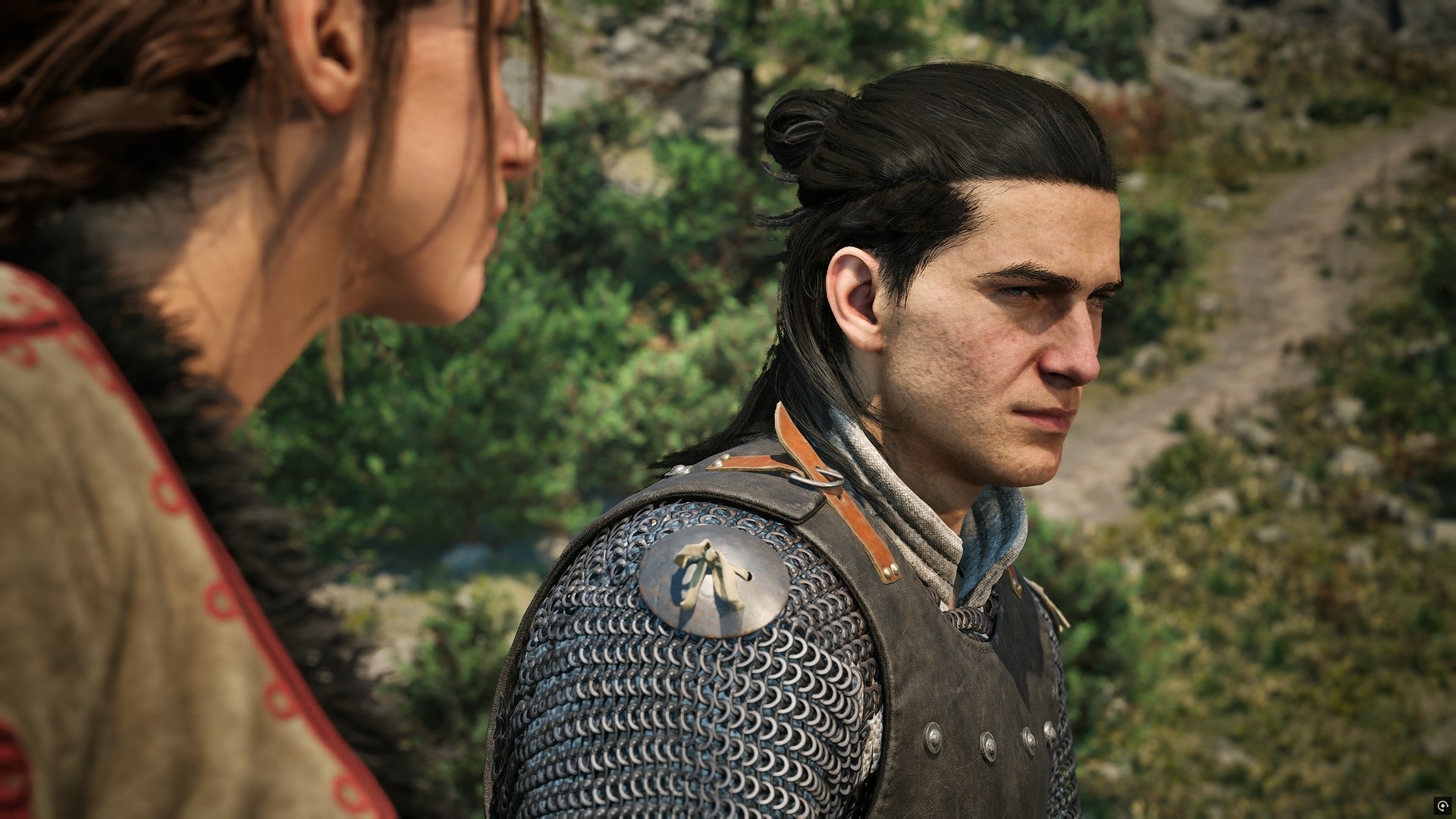
Speaking of the future of video games, Dawnwalker is my first Unreal Engine 5 game and I was surprised by how well it played given the narrative around the engine. Part of that may be that the game even looks quite a bit like Witcher 3 (a game from a decade ago, minus perhaps the hair and lighting effects) along with me running it 1080p, but I had a relatively stable, worry-free experience. There was still some irregular slowdown/pop-in and some other weird glitches like character mouths not moving during some dialogue and people walking in midair, but you see that in almost every game these days. I did notice what was perhaps a little “behind the curtain” of how resource heavy it was at least, as I’ve been as second-monitor guy for over a decade now and this is the first game that’s made every video that I tried to watch while playing lag intermittently. Not sure how this will line up with future UE5 games that I will inevitably be sucked into, but for a first experience it didn’t seem terrible, which is why I didn’t list it as a potential turn-off like all the other features I mentioned. The rest of the presentation is great though: good voice acting across the board, mostly well written, and music that hits similar to Witcher 3 even if there isn’t as much variety in it.
This review has been a little more sporadic than I normally like, but as I thought about writing it I knew there were a few factors that would be an immediate turn off to many kinds of people, so it seemed best just to get them out of the way immediately. If you’re someone who enjoys or is willing to stick through the potential negatives in the combat, UE5, and time spent on quests, you’ll find a solid RPG in the same vein of Witcher 3. It’s not better than Witcher 3 because it’s a smaller/more empty world, there aren’t as many interesting characters, and very few of the quests are as engaging as what you’d find in Witcher 3, but Dawnwalker has some fun ideas with its vampire powers (the Dishonored-esque teleport is a personal favorite), the time mechanic’s affect on roleplaying can create some interesting moments, and Dawnwalker has great attention to some little details. For example if you meet an NPC or monster before Coen normally would in the story and he’ll comment “oh I met them already” when encountering them during the intended time, and a handful of quests require that the player actually paid attention to instructions given to them earlier. Little touches like that which have been lost by even the greatest RPGs of the last decades are at play here, and I really appreciated them when they appeared. And hey, it’s nice to have a genuinely good vampire game that doesn’t punish you for chowing down on people, just as long as they’re the ones you actually mean to eat.