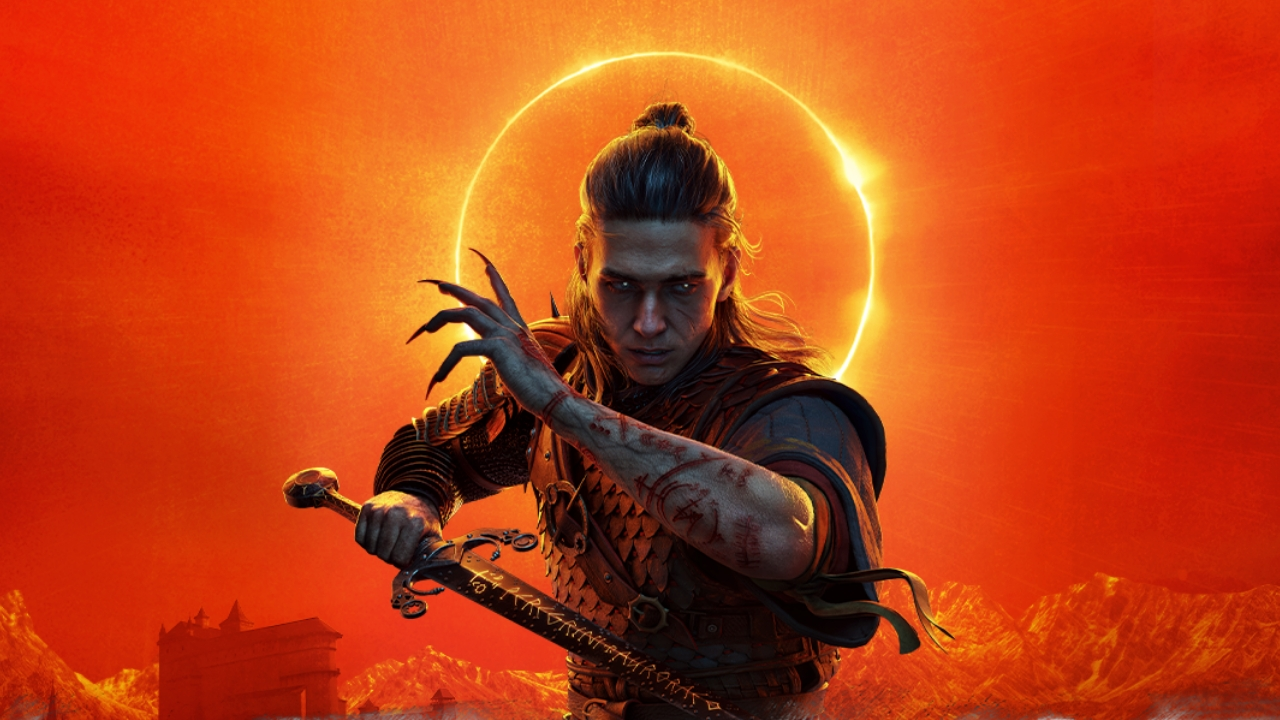
Onimusha is a game series I never really engaged with, probably because by the time I got a PlayStation 2 in 2008 they hadn’t had a new game release in two years. Well they haven’t had a new/notable game release since either, until this year with the new Onimusha: Way of the Sword, which joins the ever crowded 2026 fall release schedule of parry-based action adventure titles. As such I will be reviewing Way of the Sword more as a fan of those sorts of games rather than comparing it to the Onimusha games that came before, just as a warning.
So yes, Way of the Sword is yet another game where the combat is focused around parry attacks and depleting the stamina of your opponents. These have been all the rage and/or a plague on the game industry since the Batman Arkham and Nioh franchises popularized it and, in my opinion, Sekiro perfected the formula. The trick has been that no games with these mechanics ever really try to innovate on them, and I think that’s lead to part of what makes them a frustrating mainstay in many action games today. You add a fancy animation or sound effect when you parry, half a dozen execution animations, and consider combat settled, without anything more interesting being done.
Way of the Sword feels like the first of these games I’ve played that tries to actually add something to the formula, though the mechanics themselves still work the same. You block or dodge at the last second to gain advantages in combat, but Onimusha also brings over a “critical hit” system from previous games where you can also attack at the last second with similar benefits. What this creates is a combat loop where you can choose to fight “your way” after a fashion, where while certain responses are better than others (parry primarily only works well for weapon attacks, dodging is best against punches and kicks, and the timing on the critical hits is INCREDIBLY tight) there are only a few instances in a fight where there is only one “right” answer to a combat situation. This can help prevent the combat from feeling as frustratingly samey as it would otherwise, given that there’s only one primary weapon and people have complained in the past that a game with the main strategy of “block all the time” isn’t as engaging.
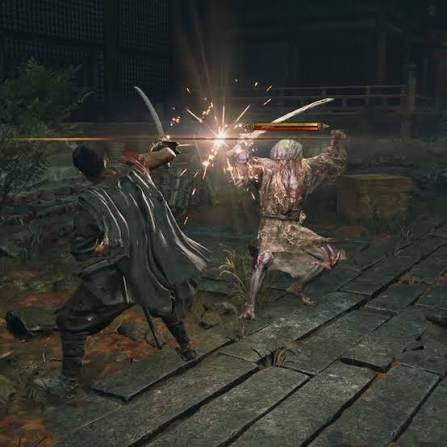
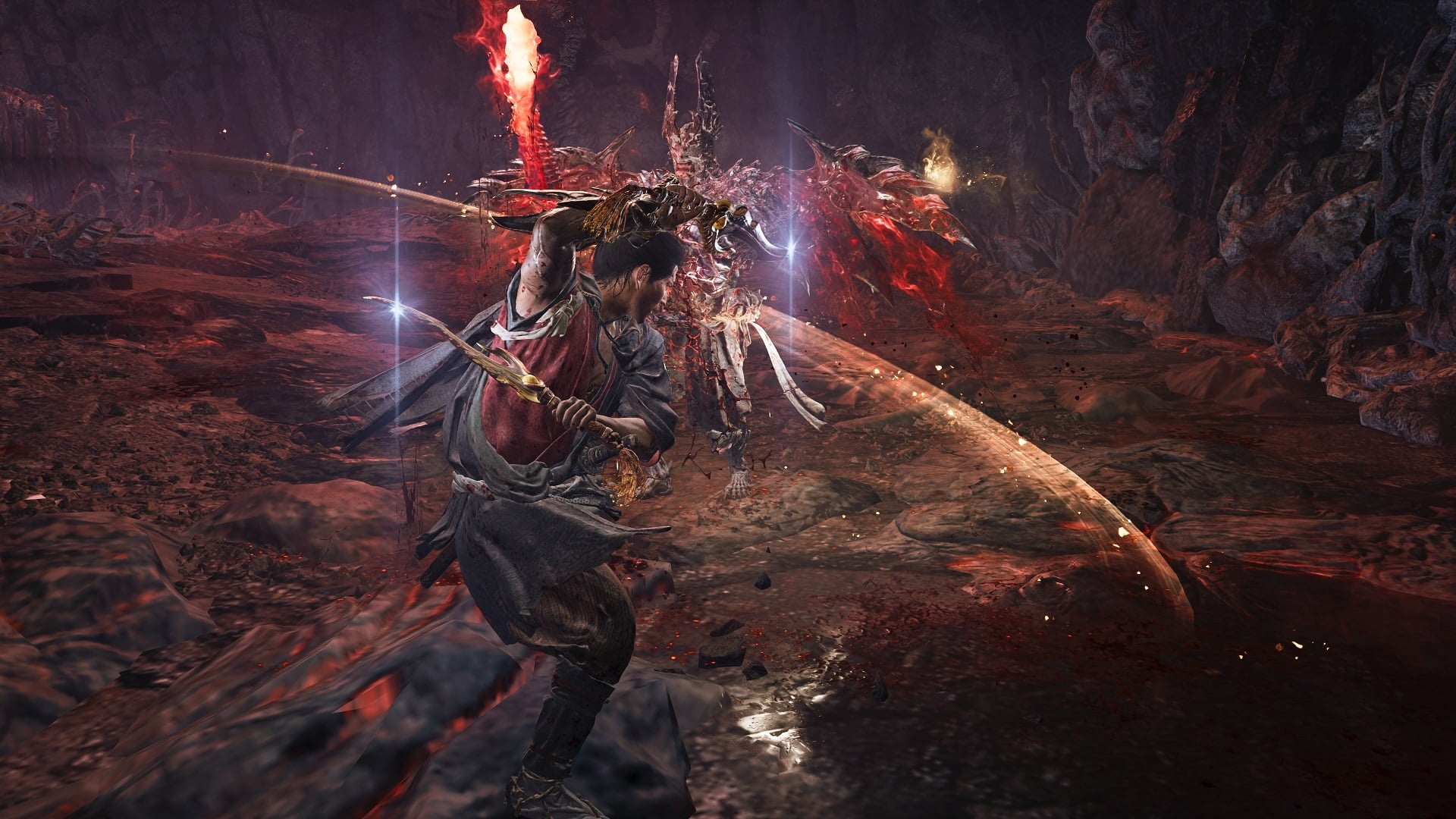
After you’ve parried, dodged, or attacked enough you’ll eventually break an enemy’s stamina, as is tradition at this point. This staggers most enemies and you can hit them with a break attack to kill many normal enemies instantly, but against bosses is where Way of the Sword also pushes the genre forward by having you pick where on the boss you want your break attack to land. To be clear this isn’t Metal Gear Rising, the break points are predetermined locations on the boss’ limbs or weapons and sometimes there are only two options, but it leads to actual thought being put into attacks that are normally nothing more than fancy finishing moves. The default flavors are red breaks that deal massive damage or purple breaks that deal notably less damage but drop additional resources to power up your other abilities, essentially asking you to choose between trying to rush down the boss’ health or going a “slow and steady wins the race” mentality while maintaining your status. Neither is necessarily the wrong option but it always depends on the situation and even the boss, as certain drawn out battles might lead you to wanting those resources rather than just trying to get more damage in.
The third flavor of breaks are different kinds of red breaks that disable enemy special attacks, which are less common but are also the best choice most of the time. These are rarely specifically called out and you’ll have to logic out what targeting this specific part of an enemy’s body might do, but this can do things like remove the extra limbs an enemy has (such as a snake tail) or destroy an annoying piece of armor they’re wearing. The point is the game is providing you these choices, making the battle feel more dynamic and also making Sekiro‘s very satisfying “take the boss’ health down with one strike” feel a little shallow by comparison. This feature for limb based removal doesn’t only happen with Way of the Sword‘s breaks on bosses though, as the game has multiple fights where you’re encouraged to attack certain limbs or certain directions for increased effects in combat. A boss drawing power from a certain device can lose that power if you cut the connection by attacking it, for example, or a weaker level enemy might suddenly be wearing armor which you can break or only attack from a certain direction where their armor doesn’t cover. It’s not a perfect system, in fact I would call trying to perfectly execute in this manner outside of the break attacks a bit finicky, but it makes the encounters a little more interesting.
As you can probably tell I liked Way of the Sword‘s combat a lot, in fact I’d say it’s probably the most fun I’ve had with a combat engine in a long while. As such I want to get one more thing out of the way before I start all the complaining, and that’s just how cool everything looks while you’re doing it. Every parry has sparks dramatically flying as weapons clash and slide off each other, along with tons of unique animations for parrying various attacks both in front and behind you, and the break attacks on bosses are all unique as well. Against basic enemies with no stamina said break attacks can also be chained together in cool though slightly time consuming animations (which is also an improvement on the mechanics), and you can also chain critical strike attacks together as well if you have absolutely perfect timing to see lots of cool teleport animations. Main character Miyamoto Musashi also brings the generic “confident swordsman” swagger to every cutscene he’s in, which the game manages to prevent being overbearing by also making him a bit of a silly character at times to level him out and make him more relatable. There is rarely an animation or action in Way of the Sword that looks terrible or feels out of place, even if the execution of said animations and actions can be difficult to pull off at times. This is no doubt in part thanks to the game running on the RE Engine which once again looks and plays perfectly, though for some reason many of the minor NPC faces look worse in this than previous titles in the engine.
Unfortunately there comes a point in many games where after they’ve perfected a combat or platforming system they add more things on top of it that spoils the whole experience. In Way of the Sword‘s case they actually do this very early on, introducing nearly a perfect (albeit very grounded) combat experience and then layering on additional mechanics that didn’t need to be there. First there’s the “Oni Strength” which is initially introduced as just a way to break open walls to new areas, but it’s then later mentioned to be used to break enemy guards, their armor, or later telegraphed boss “parry stances.” Conceptually this is fine but in practice the Oni Strength is an incredibly telegraphed attack which ruins the flow of the combat and leaves you vulnerable if you’re fighting groups of enemies and trying to break the guard of a single one. It’s not the end of the world but it makes encounters against many enemies all wearing armor annoying. The worst of it are the “unavoidable attacks” that both bosses and stronger regular enemies suddenly start to use around 40% of the way through the game, which throws all of the game’s combat flexibility out of the window by introducing attacks that can ONLY be parried. They glow pink and cannot be dodged or even regularly blocked so your only choice is to land the parry exactly correctly the first time or you lose a large chunk of your health along with your resources, and if it’s against a boss the boss will generally enter their phase two form early to punish you as well.
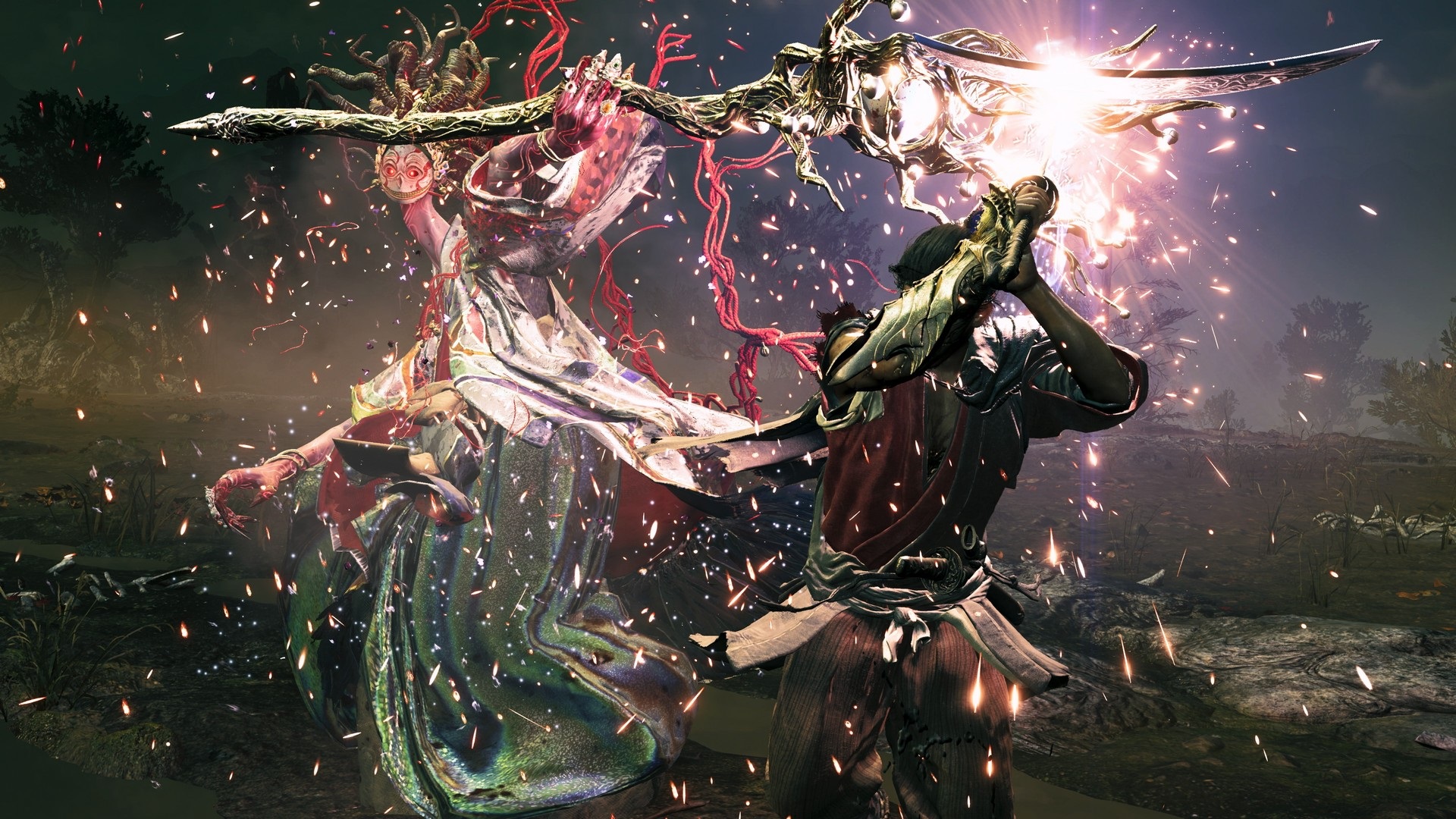
These unavoidable attacks aren’t the end of the world, but they and other inconsistent/hard to read power attacks from certain bosses/enemies are the main source of difficulty in Way of the Sword. To pull out Sekiro as a comparison again, Sekiro had attacks that were also considered unblockable but each had their own version of counter response. You dodge grabs, you jump over sweeps, you either block or step on the blade of the enemy trying to lunge at you. These all had relatively generous windows to achieve and the primary challenge was figuring out which version of the attack the enemy was doing, which was normally pretty easy or something you could remember after being hit by it once. Way of the Sword just says “get good or get out” with these unavoidable attacks, which can be especially annoying since bosses will occasionally chain multiple in a row or will do them in response to their normal attacks being blocked or parried as well. It just feels like poor game design decisions to make players execute perfection in exactly one way so many times in a row given how the rest of the game is designed, even if it does get your blood pumping when you manage it.
It’s also worth noting that as good as the combat is there are very few non-boss enemies that feel like they want to engage with you in it. In many ways this is a problem like you see in games like Devil May Cry, where basic enemies are more than happy to stand there while you either beat on them for five seconds or ignore them entirely to do the same to their neighbor. Perhaps again this passivity was intended to be a “swordsman experience” where the game wants you to stand still in combat and wait for the enemies to eventually get impatient and rush you so you can parry and strike back… but this is a video game and they’re just standing there with their guards down. This is probably for the sake of the combat not being overwhelming for players but it would be nice if it felt like the enemies want to be here as much as I do. It would also be nice if our swords combat focused game had more bosses that actually wanted to be swordsmen to sword fight you, since Onimusha‘s “samurai Resident Evil” genre tropes mean that basically every boss is either a giant monster or a human shaped creature that has mutated into some kind of monster. Sekiro might have been criticized by haters for having too many bosses that were just “guy with sharp object in his hands” but at least it worked perfectly with the mechanics, atmosphere, and the fantasy of who the character was. Way of the Sword has plenty of basic enemies with swords but only three bosses can be described as a “proper sword fight” and two of those also include throwing magical projectiles and flying through the air. It’s rough because it doesn’t make any fight as stand-out as you might want in a game with this kind of combat system, and it also doesn’t play in as well to our character Musashi’s motivations or interests either, since he just wants to be the best swordsman in the land.
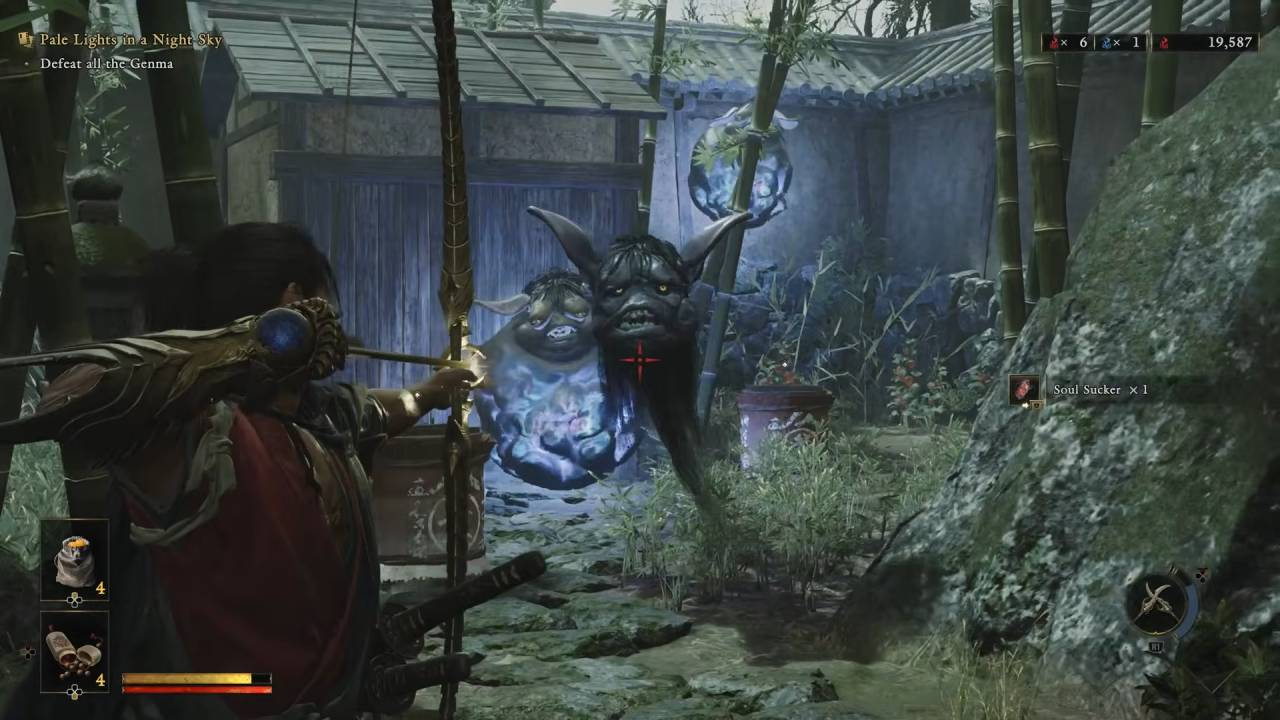
Speaking of Musashi’s characterization we can probably briefly talk about the story, though I will say right now this is the least I’ve cared about the story in a video game in a very long time. Japan is invaded by Onimusha‘s consistent nemesis the Genma due to a war in hell and Musashi ends up with a gauntlet on his arm that makes him one of the only ones with the strength to stand up to them. He meets another gauntlet owner, Takamura, and the latter sends him off on missions around Japan to halt Genma from corrupting the land and enacting grotesque human experiments… and that’s basically the whole game. There’s some underlying enmity with the main villain that’s conducting the human experiments and a rival swordsman who also has a gauntlet, but other than that Musashi just wanders around linear and non-linear maps for around thirty to forty hours at the request of Takamura or others in stalling actions against the Genma. It rarely feels like anything is necessarily accomplished outside of maybe slowing down the Genma’s spread, since their “corruption” rarely leaves areas fully after you’ve completed them and enemies consistently respawn, so there’s barely any sense of progression within the story itself. All there is to latch onto are the characters and the occasional bursts of humor, all of which are fine and makes some of them endearing but they’re also nothing to write home about.
It also doesn’t help that the world itself is pretty monotonous as well. The strangest part of the Way of the Sword is that you’ll spend the majority of your time in a non-linear map of eastern Kyoto where you’ll be free to find collectables, collect resources for upgrades, and talk to or save civilians for side quest content while doing some main missions spread across the city as well. The problem is again that lack of progress or even variety, as every single part of the city looks the same and no matter how many monsters prowling the streets are killed those exact same monsters will have respawned by the time you return. Hell, the exact same scenarios of civilians in danger will play out again if you take long enough to return to some areas, which can certainly help you refill your consumable items but doesn’t help with the game’s lingering lack of progress in the state of the world, even if the map does continue to expand as your battles against the Genma continue. The funniest part about this whole Kyoto area is you’re slaughtering these monsters and not ten steps away are civilians just hanging out, sitting on their stoops and setting out market vegetables. Some areas even have tough guy looking guards as if to pretend they’re defending the rest of the population, as if we hadn’t already seen that no human can even hurt the Genma without a gauntlet. It just makes the whole Kyoto area feel lazy, as if they needed filler when they realized they’d only made six levels so they had a handful of people throw a map together.
Kyoto’s biggest flaw isn’t even its own fault but that of the ugly beast threatening every action game: repetition. I love the Ninja Gaiden series to death and it’s the reason why I enjoy these sorts of games today, but after a certain point if you play any of these games enough the bare bones of what you’re doing (walking into a room and fighting twenty guys then doing the same in the next room) can get a little mind-numbing. Most genres can have this problem after a fashion and have different ways of breaking it up, but generally these sorts of action games really only have three cards to play: weapon variety, enemy variety, and map design. All three are obvious but I’ll explain map design a little, as I mean both the layout of the map itself and the way encounters are designed within those maps. A fight against those twenty enemies I mentioned plays out very differently depending if they all come at you at once, come in waves, are spread out across multiple elevations, etc., and it’s up to this in conjunction with the kinds of combinations of enemies you’re fighting that keeps combat from getting dull. Way of the Sword unfortunately immediately loses out in the weapon variety category, since there’s only one weapon to use throughout the game, and the enemy variety is suspect as while there are around seventeen kinds of enemies half of those are simply upgraded versions of weaker enemies. So the game has to rely heavily on its map design to carry it, and when the majority of the game is spent in the exact same area with the exact same visuals and you encounter the exact same enemy configurations every time you retrace your steps… you can see how it can weigh on you, even with combat as good as Way of the Sword‘s.
In the end that really is all it boils down to. Onimusha: Way of the Sword is a game with fantastic combat that runs very well and truly expands on the designs of the parry-focused genre, but the low enemy aggro, the feeling of being trapped in the purgatory that is the Kyoto map, boss designs that don’t always use the combat to its fullest, and a story I just didn’t feel was very engaging holds a lot of it back. It deserves the success it has due to the combat alone but everything else dragged it down so much for me that I can’t recommend it except for people who love this kind of gameplay to the point they can overlook ANY shortcomings. As someone who does love playing games like this even I started asking myself what I was doing after a main quest around 60% of the way through the game wrapped up and another four side quests showed up across Kyoto again. I almost was going to recommend it if you skip the side content in Kyoto and just push through the main story, but I won’t for two reasons. First, the final boss is a huge pain in the ass even with proper upgrades, which you would miss if you skipped the side stuff. Second the last game I said was tolerable if you just ignore all the side content was Mass Effect Andromeda, and Way of the Sword is good enough that it doesn’t deserve to be compared to that. You just have to drag yourself through a lot of tedium as you experience it, which makes it hard to recommend to just anybody.