REPLACED wasn’t a game that was on my radar to a point that I was surprised to see a number of people online actively talking about it. As near as I can tell this is driven by a general lack of great Bladerunner-esque games and some sort of enmity towards another similar game project that everyone assumes is never coming out. But as you can probably tell I haven’t done much research on the subject. What I do know is this: the game came out a month ago and I got enticed by its $20 price point, detailed pixel animations, and the promise of “brutal combat that emphasizes impact.” Combine this with a break in my schedule for new games (when I started writing this review literally every game I’m waiting for had an unknown release date) and here we are.
In alternate universe 1984 (you can tell we’re off to a great start narratively when the story about a dystopian police state is set in 1984) lead technician Warren is working overtime in his lab while his AI creation R.E.A.C.H. tries to convince him to take it easy and attempts to turn off his work station. This causes a large explosion in the facility and R.E.A.C.H. wakes up in Warren’s body due to their neural link at the time of the accident. “Reach” tries to get to the back up AI lab to analyze the problem but first responders start shooting at him on sight, forcing him to flee the facility and eventually end up outside the classic dystopian city’s high walls. Alone and hoping Warren is still alive in their shared head, Reach staggers out into the wilderness with the objective to get back into the city and return to the lab to removed himself from his creator’s body.
REPLACED describes itself as a 2.5D game in that it’s a 2D side scrolling action-platformer but you can routinely move into the foreground and background to explore your surroundings. The world is very detailed and has some real visual depth to it despite being pixel-art, but that also leads to the first and most immediately obvious flaw with REPLACED: readability in the environment. This is a very common problem with highly detailed 2D games where sometimes it’s hard to tell what is “in your path” on the 2D plane and what is in the background, and this is a battle that REPLACED struggles with frequently. Even in the first area as you escape the exploding lab you’ll see piles of debris and fire that read as blocking your path but you can actually just move through them. While complaining about it in this genre is a little like complaining about not being able to see your shoulders in a first-person shooter, it’s still not the cleanest experience even after you get used to it.
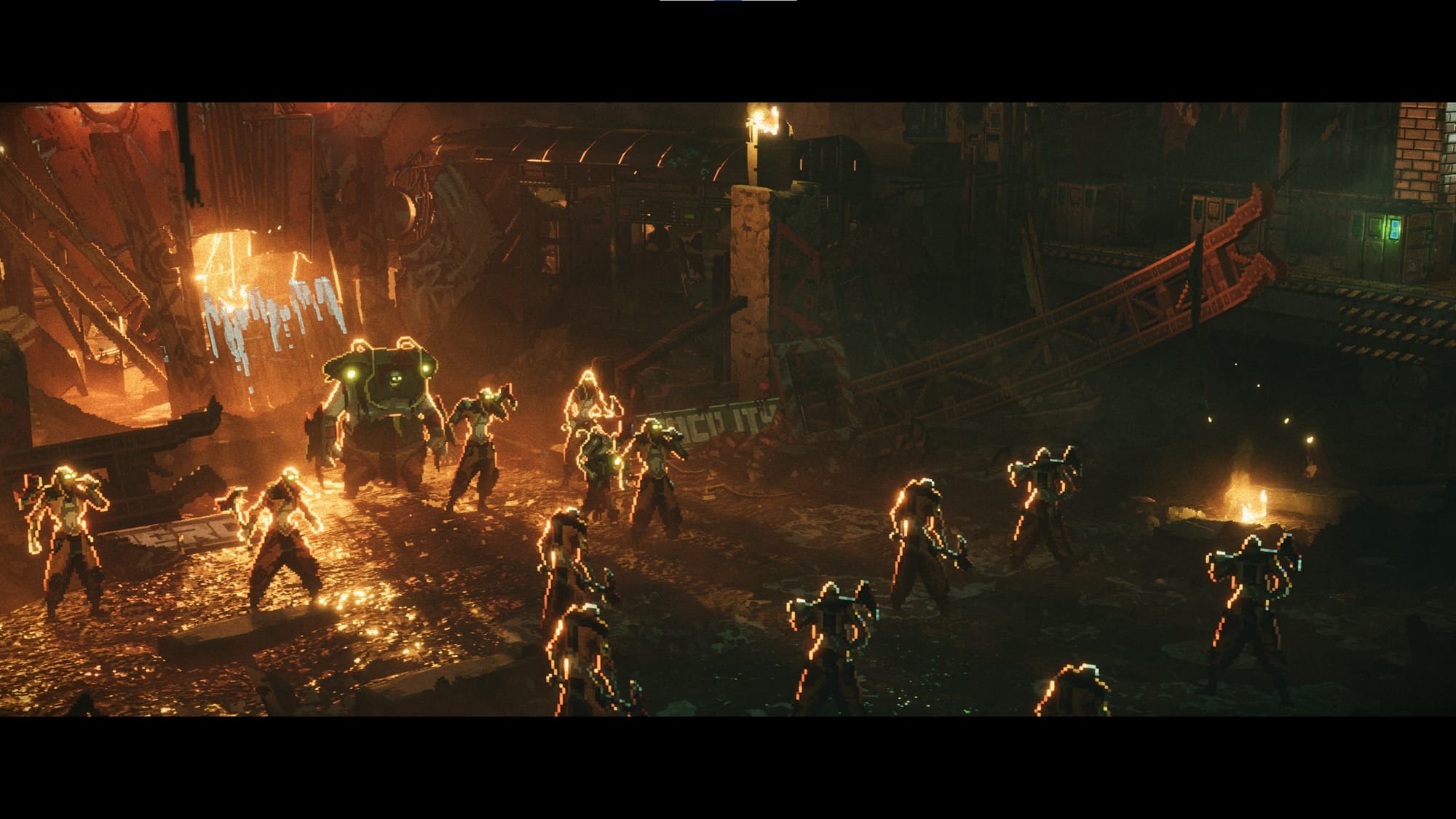
Something else that takes some getting used to is the jumping mechanics, which I would describe as “weighty” and “generous only when the game wants to be.” REPLACED frequently does area transitions by having you climb over boxes or through small holes above locked doors, and you simply cannot jump to climb these obstacles without a running start. This might sound reasonable and when you know you have to jump it can even feel natural, but if you don’t expect that you’ll have to jump into a gap over a door you will run face first into it. And if you then try to jump directly under the gap you’ll jump but not be able to reach the space above the door, because you didn’t get a running start. It’s a frustrating interaction and if I was a more committed reviewer I’d do a silly video that’s just a montage of every time this happened to me over the game’s 14 hours. Conversely, Reach has a much longer jump and nearly magnetic grip during the game’s platforming segments, which is quite striking and at times almost seems like you’re playing a different game. It just makes normal traversal feel clunky by comparison, even if in some ways this running jump “feature” does help the game world feel “grounded.”
Aside from the visual style the main draw of REPLACED is the combat, and by “main draw” I mean “if you were a fan of the combat in the Batman Arkham and Shadow of Mordor franchises.” All the basic mechanics from those games are packed into REPLACED‘s 2D environment: one button to attack, one button to counter attack if an enemy has a blue indicator over their heads, a dodge for when the enemies have a red indicator over their heads, and a finishing move system that charges up as you attack. Reach’s weapons of choice are a baton for melee combat and a pick axe that can be used to destroy armor in a very satisfying shower of sparks, while the finishing moves come from the baton turning into a gun after you hit people enough with it. It’s a cool weapon (and later you can deflect bullets with it too) but much like almost everything else in REPLACED the combat is just missing a little polish and it’s hampered by moments of frustration.
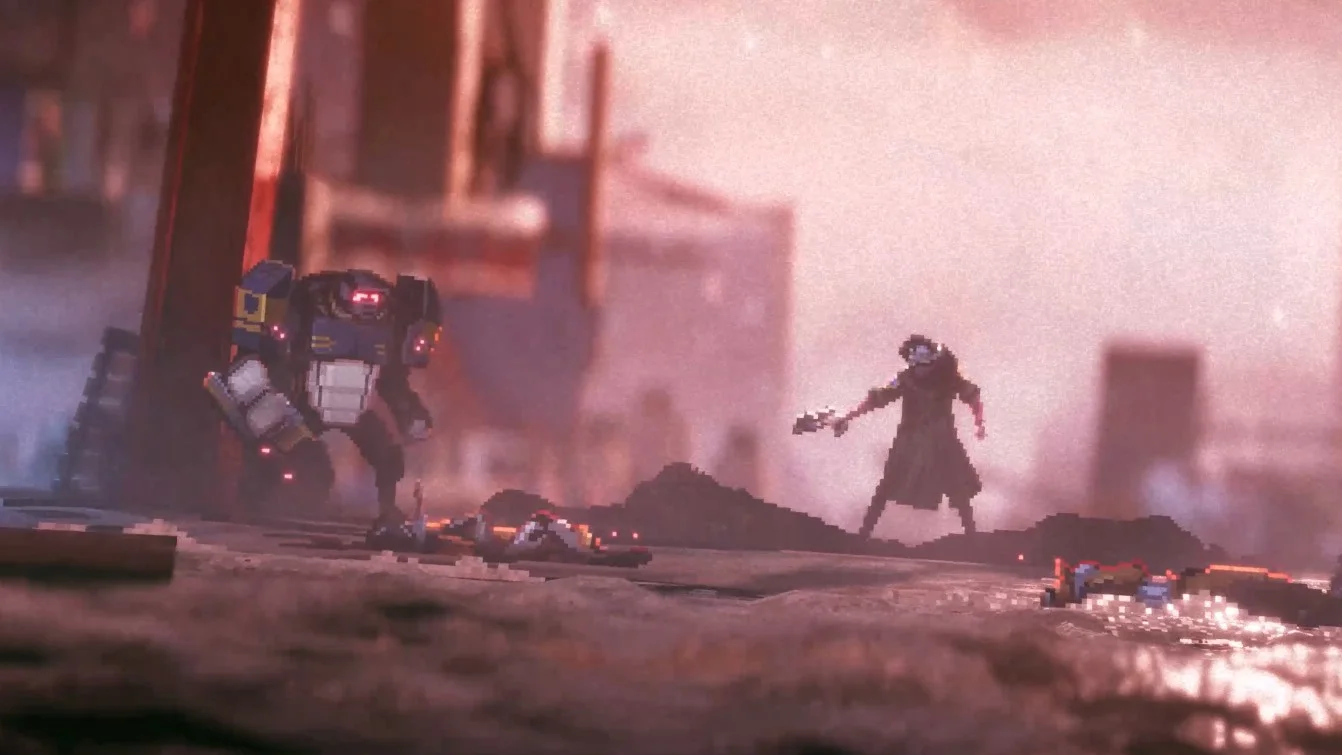
In the early parts of their respective games the Arkham and Mordor series have their finishing move systems set to a clear, specific rule: hit an enemy five times and you can do a finishing move. There’s a big combo number that illustrates where you are in the combo string and it even lights up when you get to that point, plus it’s not very hard to count to five. In REPLACED there is less of that consistency because your gun’s charge decreases if you dodge too much and the charge is illustrated by one of those annoying “the bar is filling up but is it all the way full yet?” meters. To overcome this the game does helpfully show you the button to press to fire the gun when the gun is fully charged, but it’s all the way in the lower left corner of the screen, which is really not where you should be looking when you’re fighting five dystopian police officers with their own guns. I just think a visual indicator on the weapon itself or possibly some of the game’s combat-only elements could have been moved to the top of the screen rather than crammed in the bottom, but I’m assuming they wanted to limit the UI to maintain the atmosphere.
Two more points before we move on, first about the pick axe. It’s used to destroy enemy armor and it looks cool when you do it, but it has two irritations in its design. First there’s the minor “good idea on paper but just dumb in practice” idea of large enemies with armor having their armor protection being directional. These large enemies have three pieces of armor on their bodies but you can only destroy two from one direction on the 2D plane, their chest piece and one arm piece. To get the other arm piece you have to dodge to the other side of the enemy and pick axe them from there, or alternatively you could just stay on that one side of the enemy to stop your attacks from being blocked. But then you dodge a different enemy and end up on the wrong side of the big guy… it’s just not as clever as it thinks it is and I’d prefer the enemies to have the three full pieces of armor you need to destroy before hurting them to avoid confusion in combat. The pick axe also has a weird, somewhat exacting hitbox which means it will miss if the enemy is too close to you by the time the animation finishes. This is probably an intended skill issue due to the relatively slow speed of the weapon, but I’d rather that challenge be from the enemies attacking you rather than your own attacks whiffing.
The other issue which is less about combat and more about combat design comes with the final upgrade to your baton which is just a once per fight AOE knockdown. And I hate to be like this, but it makes me wonder what the logic was here. REPLACED‘s fights aren’t anywhere near as overwhelming as the Arkham or Mordor battles can be and I never once when playing those games thought I’d want an AOE knockdown to spice things up (though I do believe Shadow of War at least has one), as you’re generally only fighting about five to six enemies at a time. So just a “knockdown stick” doesn’t seem very engaging with the gameplay loop, especially given the lack of enemy variety after the first few hours. Maybe something like introducing a robot enemy type and a “quick hack” to make them fight for you, or acquiring the bolas the assassin enemies use against you to introduce some stun strategies in combat would have been better. Instead this AOE super attack just feels like the game is worried at this point you’re getting bored of the combat and just want to get to the end faster.
To REPLACED‘s credit it does try to mix up the gameplay, which is more than can be said for a lot of games in the 2D space. There’s forced stealth sections, which traditionally isn’t a positive but helps break up the monotony of just exploration for collectables and combat, plus it works in-universe if only to keep highlighting that your enemies can still be a genuine threat. There’s also a small hacking minigame that is introduced later in the game which is mostly used to help through the stealth sections and with some minor puzzle solving, which isn’t going to win any awards but is engaging enough in a game where it isn’t the main focus. Speaking of minigames there’s also several arcade machines in the games main rest area that you can play, including in-universe versions of Frogger and Space Invaders, which helps with the world building while also just being a fun minor distraction from the dystopia misery around you (while still being full of propaganda about the dystopian misery around you). Outside of the stealth sections these are all mostly just minor features but it’s still nice to see the occasionally one-dimensional world of 2D games have some of this variety.
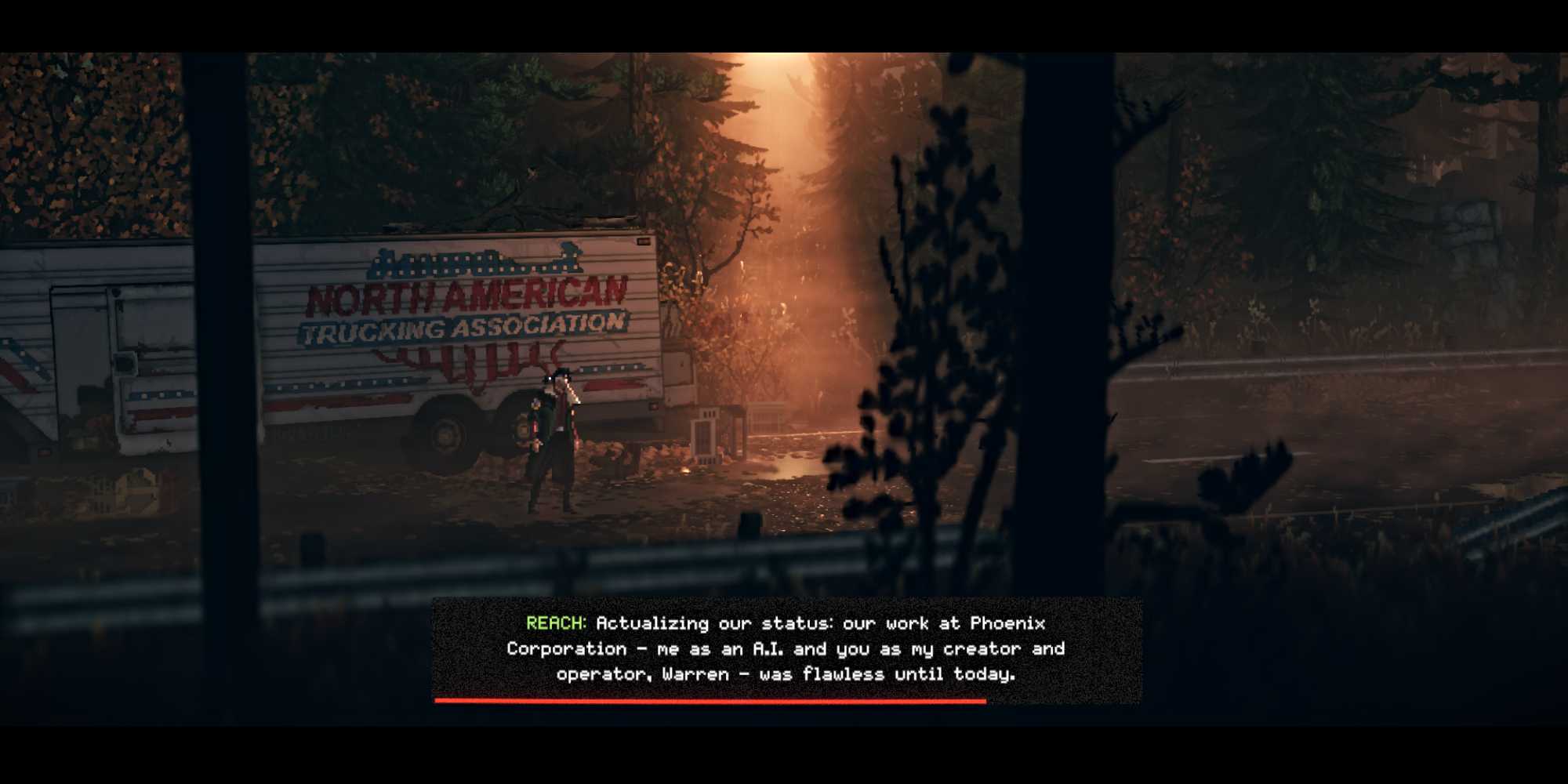
I haven’t spoken much about the plot since the intro mostly because I think it’s the weakest part of the REPLACED experience outside of the weird stationary jumping physics. The premise of “an AI who has only been fed propaganda discovers the world is actually a fucked up dystopia outside its sheltered existence” has some promise, but at its core it’s just the usual “fish out of water” story where the main character reacts in surprise to obvious things around them. Couple that with a “thank god the main character is here we can actually start our revolution now” storyline, the worst of all video game tropes, and the story isn’t much to write home about. They do try to do something interesting with the idea that Reach is more childlike in how he’s learning things through association with events of the game, but that meshes poorly with you brutally killing everyone that stands in your way. A clever spin on the story would have been the world not being as black and white as Reach’s limited experience in his new body would imply, but this is a dystopia where healthy people have their organs harvested to help the privileged so there really isn’t room for much nuance here.
Like I said earlier, the aesthetics and the combat are really the biggest draw for Replaced, and you can see as much in the reviews on Steam where many people are referring to it as “the Bladerunner game we never had.” I don’t know about all that, but in a world where many games have tried to mimic the combat of the Batman Arkham franchise REPLACED does it better than most, and the pixel-art does a great job showing the grungy brutality of the world REPLACED has created. A few missteps like the jumping, pick axe hit registration, or the inability to skip most of the dialogue in cutscenes are pretty common in the indie scene, and the developers seem open to improving the experience through fan feedback. With a few more QA testers I bet REPLACED could have been a timeless indie darling, but at time of writing it’s more just an enjoyable bite-sized treat if you’re into the genre. You will probably play it once and never touch again, but since it’s priced accordingly I don’t think that’s a bad thing.