Warcraft III has a complicated legacy, despite being one of the best real-time strategy games of all time. The success of its lore and hero mechanics helped fuel interest in World of Warcraft, and indeed it was so successful that it doomed the franchise to never get a Warcraft IV. Said hero mechanics revolutionized what you could do with those units in an RTS game, fueling countless custom games in the community. Unfortunately one of those was DOTA, which was so popular it led to League of Legends, which proved that forcing players to pay for characters and cosmetics was a sustainable business model, and here we are with modern free-to-play and microtransaction hellscapes.
Perhaps most infamous of all was 2020’s Warcraft III: Reforged, an attempt to remaster the game similar to Blizzard’s StarCraft remaster several years before, only far more ambitious than widescreen support and clearer unit models. Blizzard promised a lot and failed to deliver on most of it, leading to a somewhat abandoned disappointment of a final release where all Reforged gave players were an ugly graphics setting they didn’t want to use (fortunately classic graphics/sounds were still an option) and a loss of social features. As such Warcraft III was mostly left to rot with Reforged as a lingering cloud over it, despite Blizzard returning in recent years with some crazy balance patches to spice things up.
Or rather “was” left to rot, as Warcraft III now follows Witcher 3 in the “game that hasn’t had a (worthwhile) major update in over a decade suddenly has a free graphical update and a new DLC campaign” club. It’s a very exclusive club, given that both were announced within the last month, however Warcraft III is out first with Forsaken Kingdom so that’s what we’re going to look into today. There’s that free graphical update and new hero for multiplayer, plus paid content in the form of a new campaign for the human and undead factions set during and just after the events of Warcraft III. I’m here to talk about both the free and premium content for anyone who might be interested in jumping back into Warcraft III after all these years due to these announcements. If you HAVEN’T played Warcraft III before there will be spoilers for some story beats within, but if you haven’t you probably aren’t reading this anyway. If you are then I appreciate you, but you really should play Warcraft III rather than reading this. It’s great and I’m sure there’s some sort of sale on it at some point during the year.
The Free Stuff
The biggest change for all players in this latest release is also the least flashy to write about: Warcraft III now allows you to select twenty-four units at a time. This is big news for everyone that was frustrated by the game’s previously more limiting unit selection cap of twelve, especially when compared to games like StarCraft 2 that have essentially unlimited unit selection. There’s still no “select all combat units” button like in StarCraft 2, but with Warcraft III‘s inherently smaller armies twenty-four units should be more than enough for all but the strangest end game compositions. This is also huge news for the custom game scene, since those give you however many units as the creators of those games want. However as usual with a big patch from Blizzard many custom games are now broken thanks to underlying changes in the game, so sadly many creators are too busy picking through the wreckage of that.
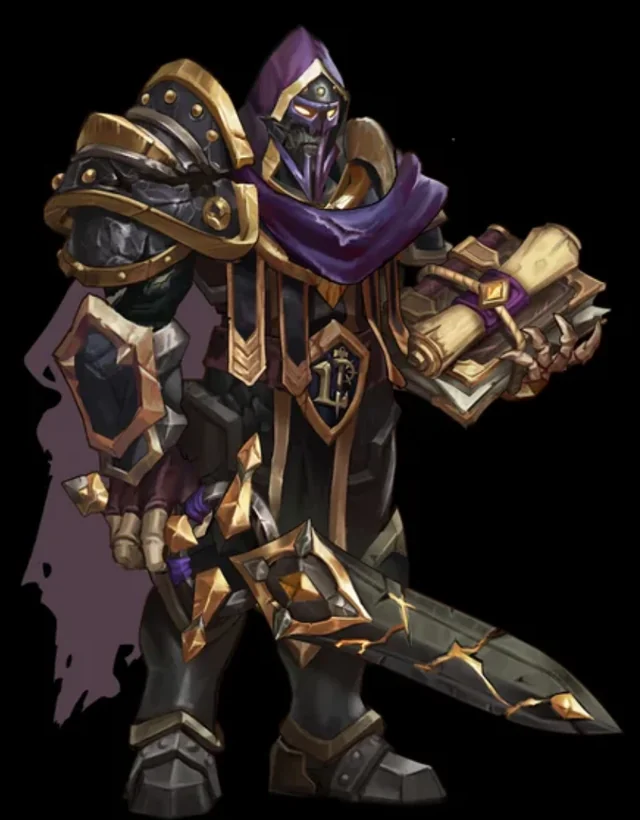
Meanwhile the most flashy news is the first new hero to be added to Warcraft III in over twenty years: the Forsaken Paladin. This paladin ties directly into the DLC, as you might have guessed from its title, and for me he is a very disappointing addition to the Warcraft III hero pool. I’m going to get a little deep in the weeds here so I apologize for that ahead of time, but let’s breakdown everything the Forsaken Paladin is and why he’s very clearly a more modern hero design that was made with only one objective. Also rather than constantly writing out “Forsaken Paladin” I’m going to be calling him “Bruce,” because for some reason one of the hero’s names when you get him is Bruce Wightbane. So let’s talk about Bruce.
Bruce has four abilities like all heroes in Warcraft III (three base abilities and an ultimate) and his first ability is a long distance dash. This deals good damage at a fair distance, further than the range of most other hero abilities but not as far as the Warden’s Blink spell, and slows enemy movement and attack speed for a few seconds if he hits them. If you’re familiar with League of Legends or other games in the MOBA genre this may not seem like a big deal, given that many heroes in those games have dashes, but Warcraft III isn’t League of Legends.
Hero mobility spells are very few and far between in Warcraft III, limited primarily to the aforementioned Warden’s Blink and arguably the Blademaster’s Wind Walk, which is one of the things that makes Warcraft III so engaging. It’s a very positional game where body blocks with units, getting caught with your hero in a bad location that limits its effectiveness, etc are all common sights in a game that has evolved around heroes that can’t just be wherever they want in a fight at the press of a button. As such the inclusion of this dash suggests one of two things from Bruce’s design process: either a) the people who made him grew up on “modern” hero design philosophy and they didn’t consider the pool of heroes he’d be dropped into or b) they assumed that this DLC release would generate interest from people that haven’t played the game in years if not decades, and they wanted him to have a “get out of jail free” button so the returning players wouldn’t get frustrated by getting their hero trapped. Either way it’s not a good start.
The second ability is the “paladin” side of the Forsaken Paladin name, a small area of effect static heal that heals “living allies” while damaging undead enemies and reducing their healing effects for the duration. Bruce is a neutral hero, meaning that he is purchased from a specific building on the map and can be used by any faction in the game, but this ability not only completely boxes him out of being used by one race (undead, since they will never be “living allies”) but it also starts to paint the picture of the design philosophy behind him. I’ll get more into that in the next ability discussion, but since Bruce is undead as well he cannot be healed by this ability either, so it does exactly nothing for an undead player and it feels really weird for a neutral hero to have that level of restriction. Sure, you’re probably not going to use neutral hero Dark Ranger when playing as the human faction, since the human Paladin can’t heal her either given her undead status, but all of her abilities are still functional if you do decide to do that. Playing Bruce with the undead just makes him have one less ability for the entire game, unless it’s an undead vs undead game but it’s still an ability used at half effectiveness.
Bruce’s third ability is a passive one, much like most other heroes in Warcraft III, and it increases ally magic resistance and healing effects in the area around him. Magic resistance is very rare in Warcraft III so we’re already in uncharted territory, but this is really where my tinfoil hat comes on so strap in. The biggest “flaw” left over from the early days of Warcraft III‘s design is the undead faction’s ability to burst down armies and single targets with their powerful spells. No other faction has that level of damage potential at range, and it’s seemingly hard to balance that given how much of that high burst damage has become a key part of undead’s identity. That being said, it is still a point of frustration for many in the community, so what better way to deal with it than by creating an anti-undead hero? Give him the ability to damage undead while healing allies, an aura that makes your whole army resist the damage from the Lich and Dreadlord’s AOE spells, and make him undead himself so he’s immune to the Death Knight’s Death Coil.
So now we have a hero tailor-made to be immune to the undead’s most popular hero while also resisting and making his army resist the damage the rest of the undead heroes put out. It feels like making a hero designed around fixing a “problem” rather than making a hero that’s actually engaging on its own merits. This is no clearer than with Bruce’s ultimate ability, which is the most grab bag “we don’t know how to stick the landing so just make it do everything” in the entire game. In an area around him Bruce will: heal allies a moderate amount, boost their attack power by 25%, remove debuffs (and when you do that heals and boosts ally damage even more), and on top of all of that it stuns all enemies in the area as well. Whether this is MOBA hero design, a lack of creativity, or once again just trying to crutch the new hero because you assume lots of new players will want to try him, it’s a generic, kitchen sink approach to making a hero’s final ability feel “ultimate.”
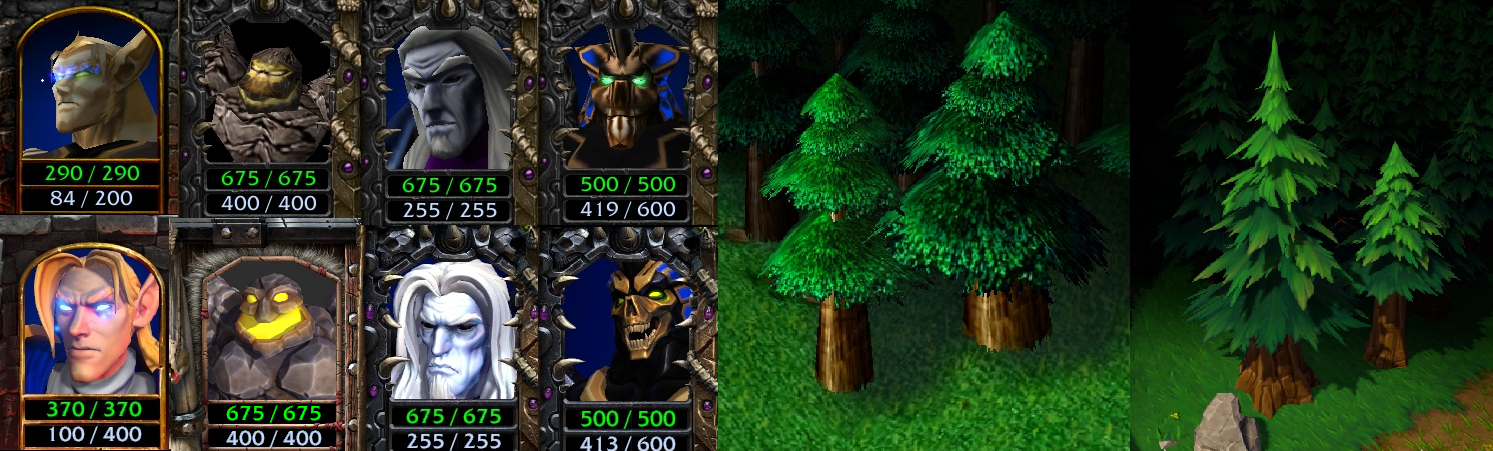
As you can see I’m not impressed with the new hero, since his design speaks far less of a hero that needs to exist and more like people trying to fix a problem that only the loudest in the community shouts about. But maybe I’m just an undead player who feels both personally attacked and left out because the new hero has a limited role in my faction. Now let’s talk about something that’s even more subjective: graphical design! Warcraft III Reforged was infamously known for its controversial remake-style graphics, with a number of units and textures looking terrible while everything was a much uglier, darker shade that made unit readability difficult. Readability is such an important part of the RTS genre that basically anyone who stuck with Warcraft III stuck with the classic graphics after release and the whole second graphics setting for Warcraft III was mostly ignored. So naturally Blizzard decided that with this “return” to Warcraft III they should make a THIRD graphics setting, and Forsaken Kingdom‘s release comes with a new graphics setting called “Definitive.”
For the sake of time we’ll put aside the arrogance of calling a new graphics setting “Definitive.” To their credit the graphics are certainly more faithful to the original designs than the Reforged graphics are, to the point that much of it is probably the meme of “this is what I remember it looking like” for many people that haven’t played Warcraft III for years. For me many of the models look a little plastic toy-like, a little too much like their mobile game Warcraft Rumble which is a little too coincidental for my taste and isn’t what I’m here for when playing an RTS. Beyond that there’s also issues with animations in the character portraits not emoting when you click them while still playing voice lines, and despite trying to clean break with Reforged the spell effects and many of the sound effects are from Reforged. This gives the impression that Definitive is just Reforged with another layer of paint on top, and that plus the broken animations just makes me feel uncomfortable playing with Definitive graphics. That being said the graphics are the only way to play the new campaign content (no other campaigns in Warcraft III work with Definitive graphics on but Blizzard says they’re working on it) and as I played that they started to grow on me. One indisputable problem with the Definitive graphics update is that Blizzard removed the ability to choose to use multiple versions of the graphics at once which they added after Reforged‘s release, so if you like the Reforged graphics for hero characters but would rather have original or Definitive for units that’s no longer an option. Always love when new patches for old games remove features.
What You Pay For
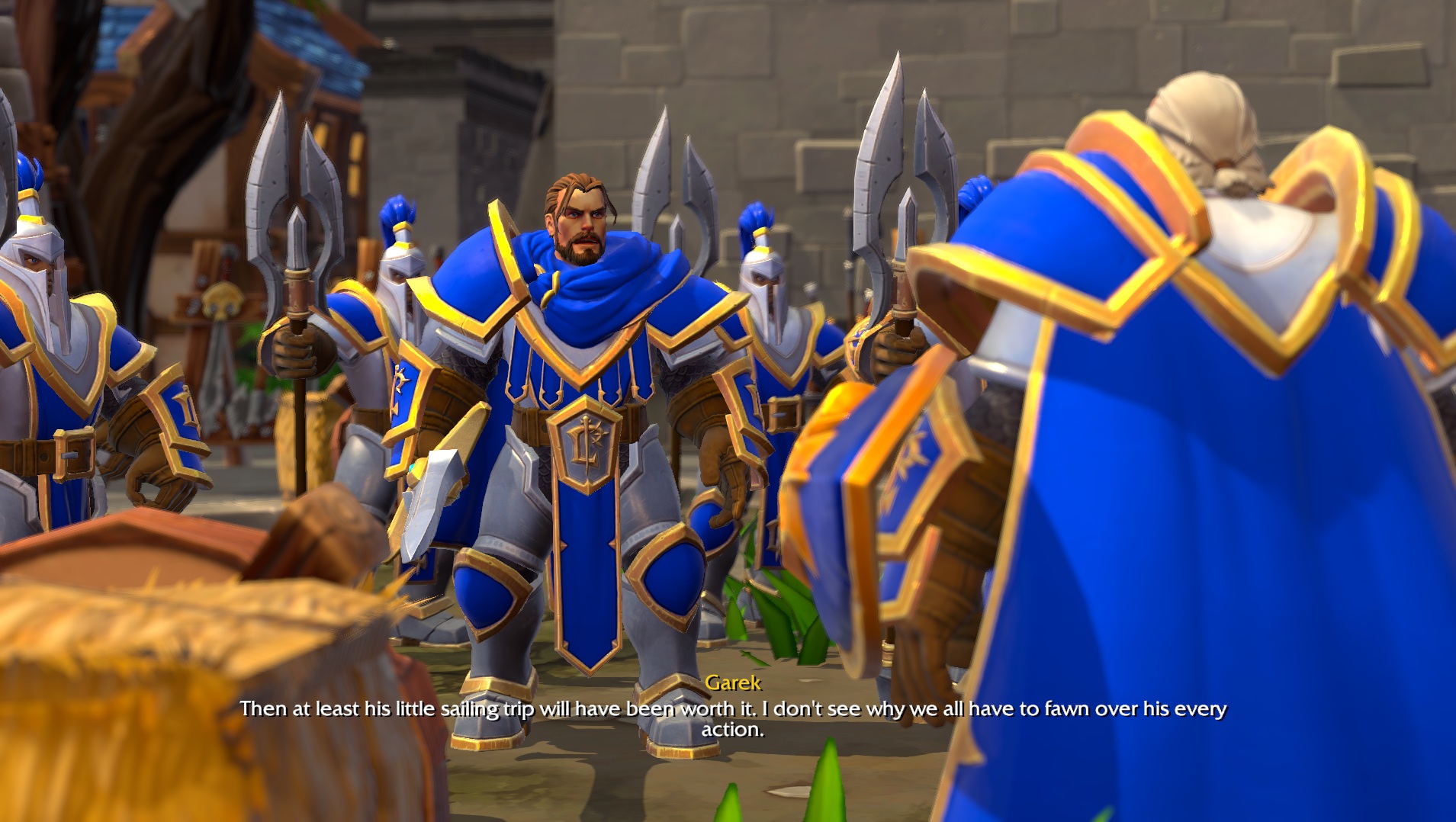
If you feel like shelling out thirty dollars you get two campaigns, a shorter human one and a longer one with the undead as the focus. The idea here was to answer questions raised by the end of the human campaign in Reign of Chaos and the four year gap between Warcraft III and World of Warcraft, and on a baseline it achieves that goal. The human campaign gives a brief point-of-view of human guard Garek during the fall of Lordaeron, which was something that happened mostly offscreen during Reign of Chaos, while the undead campaign follows the Forsaken after the end of the Frozen Throne story as they try to establish themselves as an independent faction. The Forsaken were a notable society and member of the Horde in World of Warcraft, so addressing why they started working with the Horde, how the rest of the undead Scourge acted upon the Forsaken spinning off from them, etc. were things that were sort of glossed over when World of Warcraft released.
They’re addressed to a certain degree here in the Forsaken Kingdom campaigns, though Blizzard hyped up themes of “what do you do when you’ve lost everything, how do you rebuild from zero” that in my opinion were never really developed. Most of the loss themes drift away after Garek’s initial shock of seeing Lordaeron in flames and trying to save civilians, while the undead campaign is the usual “hey guy go find these ingredients and clear out this monster den,” because Forsaken Kingdom isn’t a traditional RTS campaign. In Warcraft III‘s Frozen Throne expansion there was a campaign called Founding of Durotar, which eschewed the traditional Blizzard RTS tropes of gathering resources and building bases, instead choosing to go all-in on the hero mechanics with a gameplay style more akin to a traditional RPG or Diablo experience. For my money it was all in service of making the RTS-focused Warcraft audience used to the idea of walking up to people with big exclamation points over their heads hanging out quests, but it was both an inoffensive gameplay experience and NOT the first thing anyone would think of when they hear “new Warcraft III campaign.” But unfortunately here we are, with Forsaken Kingdom entirely focused on hero mechanics and RPG style quests rather than the units, macro, and micro that Warcraft III is best known for.
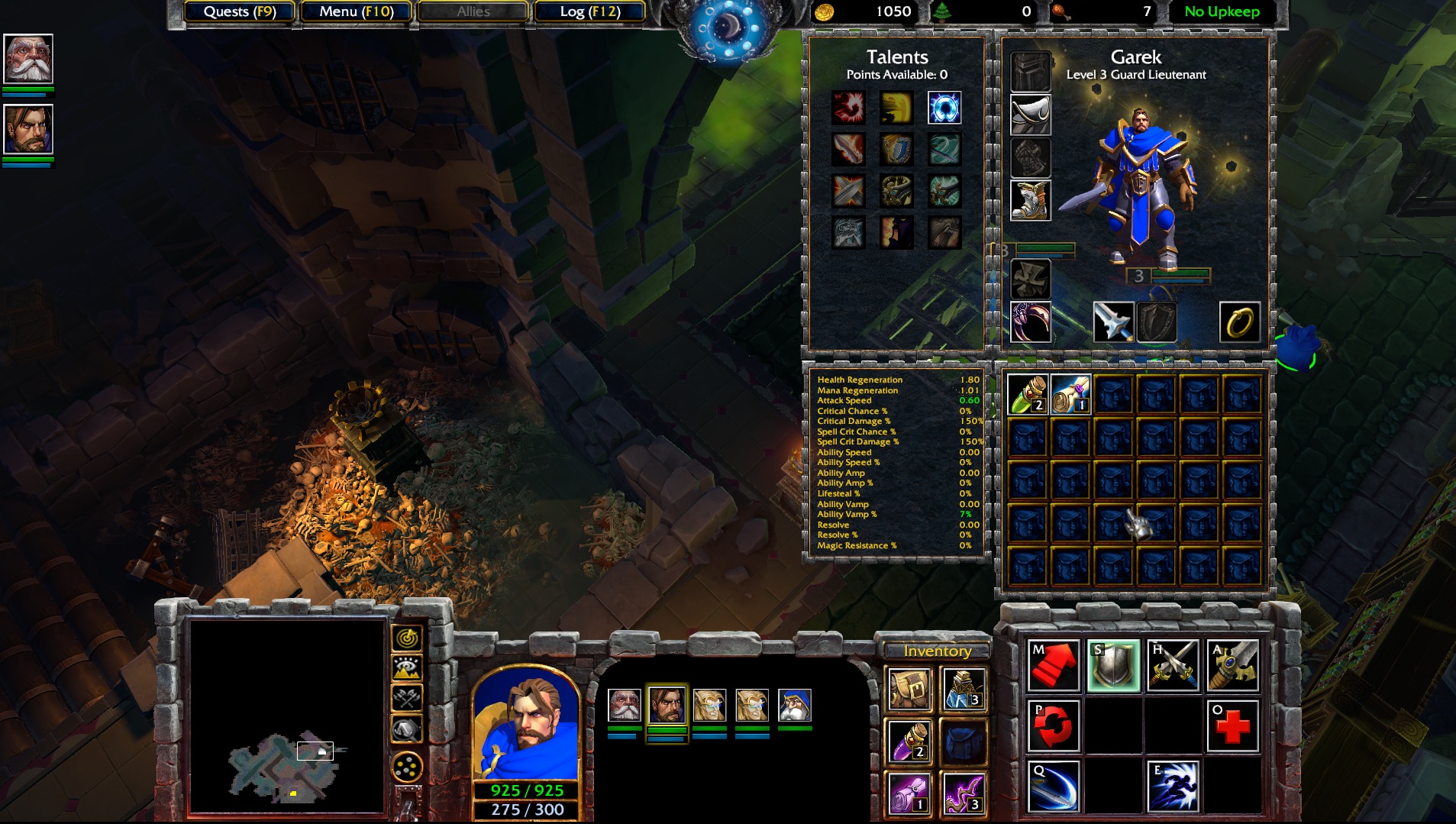
To be fair, Forsaken Kingdom is a much more thoughtfully designed experience than Founding of Durotar. For starters there’s the inventory screen shown above, which is pulled directly from games like Spellforce 3 that intentionally took Warcraft III‘s hero mechanics and expanded on them in a similar way. Rather than having only six inventory slots per hero and your heroes abilities growing in a very scripted way, Forsaken Kingdom gives you an extensive inventory and “talent points” that you can invest in passives that let you build your hero abilities to your tastes. For example one talent point tier might ask if you want to give your hero more armor, attack speed, or attack power, while others change how individual hero abilities function, such as a healing ability being able to target enemies for damage. The expanded inventory also encourages further use of consumables, as in Durotar you started getting items that were so good they clogged up your six inventory slots and removed the ability to keep healing items on your person. Now Forsaken Kingdom lets you keep the good items as well as healing or buff consumables to be used in a pinch, and it feels like a much less constrained experience in that way. Your heroes also talk to each other more as they travel, which gives them a lot more personality than the heroes had in Durotar and helps flesh out the world.
Unfortunately that is basically the end of the nice things I have to say about Forsaken Kingdom. Their attempts to expand the groundwork laid by Founding of Durotar was a noble one, however it was misguided in a number of key areas. For starters there’s no disposable summonable unit to tank damage like there was with Misha, the bear that you could summon over and over again in Durotar, and the one healing spell you have on hand only works on other targets and not the healer herself. This means that your heroes are going to be taking a lot of damage that is not easy to recover without retreating back to healing stations, which slows down the pace of the game immensely. This becomes less of a problem as the game wears on and you get more passive healing abilities from equipment, but the early game experience is not what I would call enjoyable. Moving through the maps isn’t super fun either, especially the multi-layered hub area that is the Forsaken’s base. I haven’t ever played World of Warcraft but I would assume that this Undercity is somewhat faithfully designed around how the Undercity is in WoW, but a fascinating place to explore in a third-person RPG is not the same as an RTS. There’s lots of elevators to traverse to get around along with winding pathways and closed off areas that only open as you progress the story, which just feels like a lot of clutter compared to the much smaller and contained city of Durotar. But Durotar was designed with “quick stop for quests and then move on” in mind while the Undercity has to meet certain preconceived expectations.
The loot collection isn’t great either. It’s far more randomized than Durotar, meaning that what you get playthrough by playthrough and save file to save file is up to RNG and not much else, leading to tons of trash in your inventory akin to the worst days of Diablo 3. Additionally the huge inventory available and the amount of equipment slots you have makes a lot of the inventory not super impressive compared to the high impact items you might expect if you played Founding of Durotar. This means that most items are small increases in stats rather than big numbers, at least for the first half of the game. You also only have one “active” inventory slot where you can cast a unique spell based on your equipped items and the rest are just passive abilities, so the amount of engagement you have moment to moment with your equipped items is pretty weak as well. Compare this to something like Durotar where each hero had two or more items with active abilities to use during fights and Forsaken Kingdom feels very lacking, even while you’re cycling through two or more other heroes during combat. I just would have liked more thoughtfully designed and consistent item drops across the game, even if it meant you only got notable items from fighting bosses or quest completion.
I would have also liked the campaign to be released in a playable state, but that appears to be too much for modern Blizzard. It would be no exaggeration to say that Forsaken Kingdom has the lowest quality on launch of any Blizzard game I’ve played, to the point where this is an impressions piece rather than a review because I didn’t finish the game (which is a first for me with Blizzard games). The amount of glitches, broken quests, and mechanics that just didn’t work are almost too lengthy to list, to the point where it feels like they didn’t playtest it at all. But I’ll give it a shot anyway, with a small caveat that Blizzard is “aware of many of these issues” already so if you decide to play this yourself maybe it’ll all be fixed when you do. Lucky you!
The main offender is that many hero abilities and items don’t work, or at least don’t do what they say they do in the item description. You pick up an item that says you can cast the Breath of Fire spell, but when you cast it there is no visual effect and it does no damage, while a spear that says it damages and stuns only damages. This makes the item system I mentioned even more frustrating because even if you pick a good item there’s no guarantee it will actually do what it says, but as I said hero talents and abilities are similarly unreliable. A hero talent that gives your hero poisoned arrows completely turns off their other passives, while an ability that says it drains mana for an aura ability doesn’t drain the mana and doesn’t appear to have any effect when the aura is active, except one or two times where it does for no discernible reason. Some times out of nowhere none of your characters can heal any more, with no spells or items restoring their health until you move to a different zone in the level, but that’s a different glitch than the one where none of the items that say “heal you when you cast a spell” work either. This is probably when I should mention that hero talents are permanent, as are the levels you invest in abilities like in the other campaigns, so unless you’re saving across multiple save files you may not realize your abilities aren’t working until you’ve gone too far to turn back.
Speaking of going too far to turn back, there are also multiple glitches that can completely break your playthrough and force a restart, unless you’re too far gone into a chapter and are just forced to work around it. I encountered several of these in the second part of the undead campaign but who’s to say I didn’t avoid a dozen more in the earlier acts by accident, or ran into ones I didn’t notice? I dared to explore a little before doing the first quest of act two, which apparently triggered a sequence that wasn’t supposed to happen until later in the chapter. When I got the point when that trigger was supposed to happen naturally it didn’t, and I couldn’t progress the game at all without restarting the whole act. Several mini-games (Forsaken Kingdom includes custom game style mini-games like kart racing and a play on Vampire Survivors) don’t function properly without reloading the game until they decide to load their assets properly, and a particular boss can be trapped in an invincibility state while constantly spawning infinite enemies that linger even after you fail to kill him. If you save before realizing that he’s in this state you will have to finish that map quickly and never return, otherwise the whole map will be flooded with endless enemies that the engine itself won’t be able to handle, never mind your characters. What made me finally stop playing though was just the simple, humble game crash. The game crashed twice in a row during the same fight with a boss, and since it was a main story boss I didn’t see any way around the error. Obviously other people have avoided this error, as I’ve seen positive reviews and “complete cutscenes” videos on YouTube, but I already wasn’t having fun after the Vampire Survivors mini-game and the aforementioned invincible boss, so I just gave up.
On the whole I don’t think Forsaken Kingdom is that good for Warcraft III, outside of the addition of twenty-four unit selection. The campaign being kicked out the door with very little QA aside, the new graphics aren’t going to wow anyone and the loss of features like mixing-and-matching the graphical styles and offline-play is not outweighed by an over-designed new hero that doesn’t fit in with those that came before and a campaign that is not in the primary style of the genre. RTS games continue to struggle in the current market, and while fans hope that games like ZeroSpace and Dawn of War 4 will bring them back I think there was a real opportunity for Warcraft III to make a splash here with its more traditional RTS gameplay elements. Instead we have just a top-down World of Warcraft/baby’s first RPG experience that is a minefield of glitches, bugs, fatal errors, and missing features that Blizzard is super promising they’ll not only fix but that they’ll release more campaigns like it if it does well. And I don’t know about you, but that sounds more like a threat than a positive for anyone.